
Pelvic Floor Dysfunction Treatment in Guelph & Wellington County
Pelvic floor dysfunction is common — and treatable. Our pelvic health physiotherapy team identifies whether your pelvic floor is weak, tight, or both, and builds your treatment plan from there. No referral is needed to book.
. No Referral Needed.
Convenient billing available with most major insurers











If you don’t see your provider listed, give us a call to confirm. Learn more about convenient billing.
Pelvic floor physiotherapy is increasingly established in the research as a first line of defence against incontinence and pelvic pain. The Cochrane Collaboration (2010) concluded that physiotherapists with specialized training in pelvic floor physiotherapy and rehabilitation should be the first line of defence, before surgical consultation, for stress, urge and mixed incontinence in women.
The pelvic floor muscles attach to the front, back and sides of the pelvic bone and sacrum. Like a hammock or a sling, they support the bladder, uterus, prostate and rectum — and they must be able to contract to maintain continence and relax to allow for urination, bowel movements and, in women, sexual intercourse.
When these muscles have too much tension (hypertonic) they will often cause pelvic pain or urgency and frequency of the bladder and bowels. When they are low-tone (hypotonic) they contribute to stress incontinence and organ prolapse. You can also have a combination of muscles that are too tense and too relaxed.
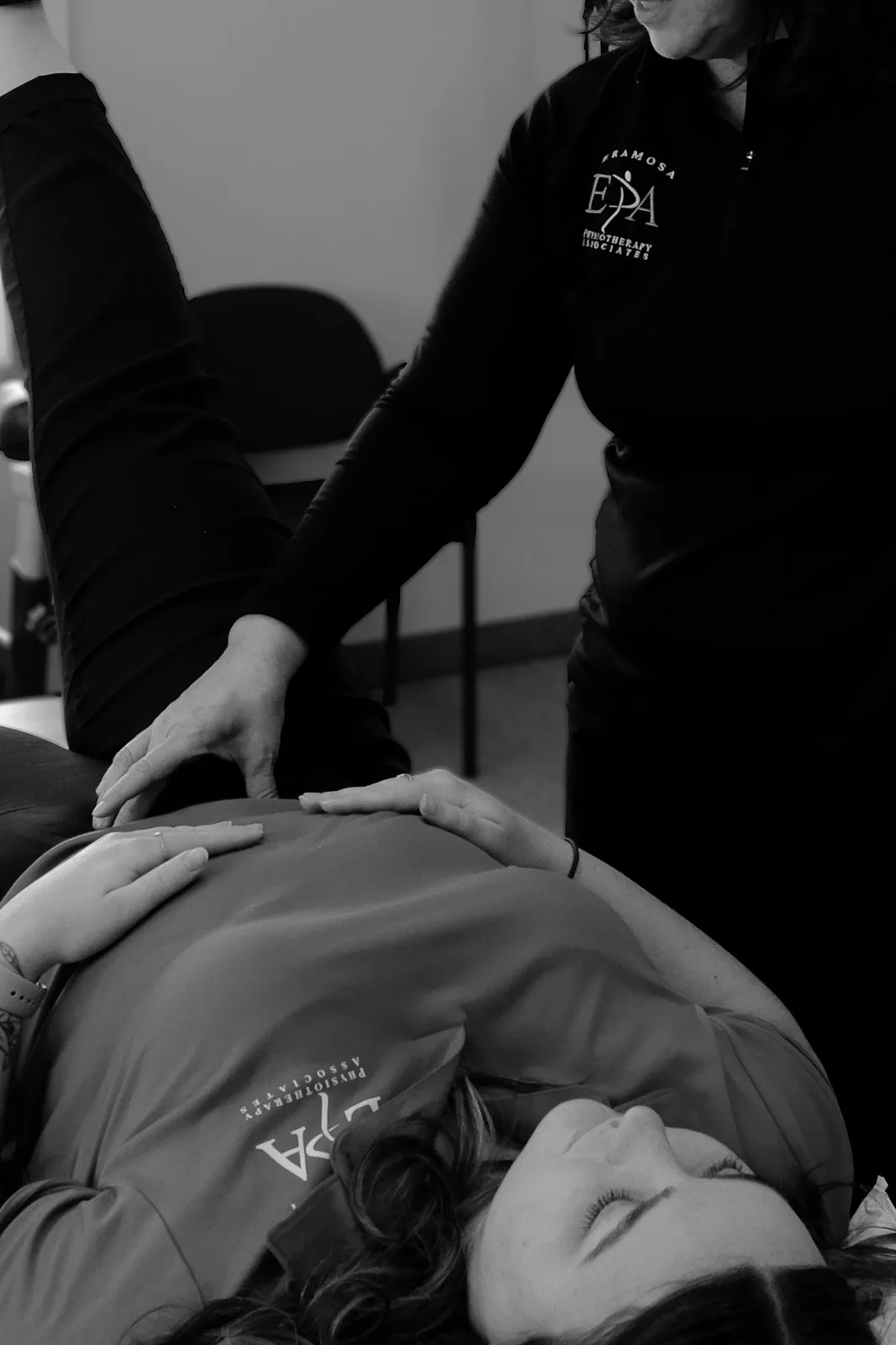
Common causes of pelvic floor dysfunction
Pelvic floor dysfunction usually comes down to how the muscles are working — too weak, too tight, or poorly coordinated:
- Weak (hypotonic) pelvic floor muscles — contributing to stress incontinence, urge incontinence and pelvic organ prolapse; incontinence is NOT a normal part of aging
- Tight (hypertonic) pelvic floor muscles — contributing to urinary and fecal urgency, urge incontinence, chronic pelvic pain, dyspareunia, vaginismus, vulvodynia, pudendal neuralgia, interstitial cystitis and chronic prostatitis
- Tight connective tissue in the abdomen, thighs, groins and low back — the container of the muscles, which often needs to be relaxed before internal work can be done
- Stress and anxiety — the pelvis is an area where we often hold stress, and thoughts, attitudes and beliefs can perpetuate pelvic pain
Pelvic health conditions we treat
Pelvic floor dysfunction shows up differently at every age and life stage. Each of these has its own dedicated page:
- Pelvic pain — most individuals who experience pelvic pain have pelvic floor dysfunction, specifically muscles that are too tight
- Female incontinence — the involuntary loss of bladder control, from stress, urge or mixed causes
- Male incontinence — involuntary loss of bladder control in men, often following prostate treatment
- Prolapse — pelvic organ prolapse, which can cause heaviness, pressure or bulging symptoms
- Pregnancy & beyond — education and treatment through pregnancy, birth preparation and postpartum recovery
- Youth pelvic health — pediatric pelvic health concerns including bedwetting and daytime accidents
- Menopause — pelvic health symptoms through perimenopause and menopause
How we treat pelvic floor dysfunction
Pelvic floor dysfunction is assessed by specially trained physiotherapists using internal and external hands-on techniques to evaluate the function of the pelvic floor muscles — always at your pace, and always with your informed consent. Treatment may include:
- Assessment of your ability to contract and relax the pelvic floor, along with the bones and muscles of your lower back, hips and sacroiliac joints, which can stress the pelvic floor
- Treating tension before weakness — once the muscles reach a normal resting tone and can relax fully, strength is reassessed and strengthening exercises are prescribed if appropriate
- Connective tissue release for the abdomen, thighs, groins and low back when an internal examination isn’t yet comfortable
- Self-care strategies — avoiding pushing or straining when urinating, reverse Kegels to lengthen and relax the muscles, warm baths, posture and stretching such as yoga
- Persistent-pain education — understanding how our pain system works has been shown to be an effective way of reducing the threat of ongoing pelvic floor dysfunction
Recovery Timeline
Pelvic floor recovery depends on whether your muscles need to relax, strengthen, or both — your physiotherapist will outline a realistic timeline at your first assessment and adjust it as you progress.
When Physiotherapy isn’t enough
Medication prescribed by your doctor can be a helpful adjunct — including local muscle relaxants — and if your symptoms aren’t improving in a timely manner based on your assessment findings, we will work with you and your physician to explore next steps.
Ready to Get Started?
Schedule Appointment
Book directly with the clinic and physiotherapist of your choice.
Related Articles
No posts found.
Try adjusting your query parameters.
What Our Patients Are Saying
What our patients are saying
Trusted by 2,000+ patients annually for over 30 years.
Frequently Asked Questions
Get your questions answered
Common questions about pelvic floor dysfunction. Still have questions? We’re happy to help.
No. Physiotherapists in Ontario are primary care providers, so you can book an assessment directly. Direct billing to most major insurers is also available at our clinics.
Not always. Kegels are not indicated for every pelvic floor problem — sometimes they do more harm than good, and they are often not performed correctly. Your assessment identifies whether your pelvic floor needs strengthening, relaxation, or both.
A one-on-one conversation and assessment in a private treatment room, at your pace. Your physiotherapist explains what they’d like to assess and why. An internal examination is one assessment tool and only ever happens with your informed consent — external approaches are available when it isn’t appropriate or comfortable.
No. Incontinence is not a normal part of aging — and it responds to treatment. Pelvic floor physiotherapy is established in the research as a first line of defence for stress, urge and mixed incontinence.
Yes. We treat male pelvic health concerns including incontinence and chronic pelvic pain, and pediatric pelvic health concerns such as bedwetting and daytime accidents through our youth pelvic health service.
Related conditions
You may also be dealing with
Ready to get started?
Your Recovery Begins Here
.
No Referral Needed.