
Prolapse Treatment in Guelph & Wellington County
Pelvic organ prolapse can cause vaginal heaviness or bulging that often gets worse as the day goes on. Our physiotherapists offer conservative care that can improve prolapse symptoms and help you avoid unnecessary surgery.
. No Referral Needed.
Convenient billing available with most major insurers











If you don’t see your provider listed, give us a call to confirm. Learn more about convenient billing.
Women with prolapse notice a range of symptoms, from minimal to more noticeable. Often there’s a sense of vaginal heaviness as the day goes on or after standing for too long. Other women are suddenly alarmed when they feel or see a bulge extending from the vaginal opening.
Symptoms of prolapse can also include pelvic or perineal pressure or heaviness, low back pain, difficulty emptying the bladder or bowel, and sexual dysfunction. Importantly, prolapse itself is often not the source of pelvic pain — that pain is usually caused by overactive pelvic floor muscles working to hold the prolapse in.
There are several options for managing prolapse, including conservative physiotherapy care and surgery. Physiotherapy can improve the grade of prolapse and help prevent unnecessary surgery, and women who do pelvic floor strengthening before surgery tend to have fewer post-surgical recurrences of prolapse.
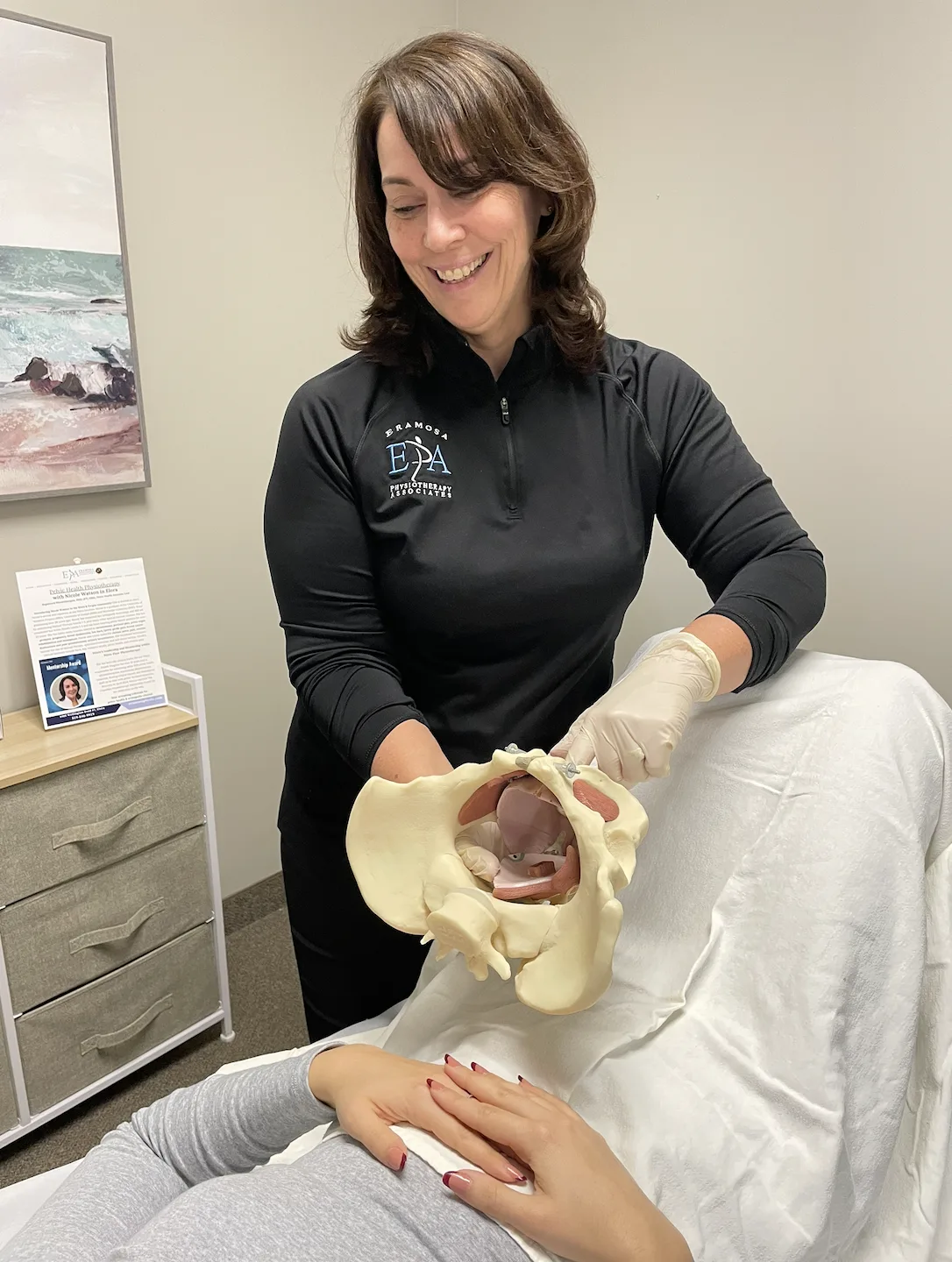
Medical diagnoses for Prolapse
Pelvic organ prolapse can take a few different forms, depending on which organ has lost support:
- Cystocele — the bladder pushes downward and falls against the vaginal wall
- Rectocele — the rectum pushes against the vaginal wall
- Uterine prolapse — the uterus descends into the vaginal canal
How we treat Prolapse
Prolapse is a pressure management problem, not something that can only be fixed with surgery. Pressures within the thorax and abdomen can push down on the pelvic organs, so we work on the factors that contribute to that pressure.
- Assessing posture, spinal mobility, movement patterns, hip mobility and strength, and breathing habits to help decrease downward pressure on the pelvic organs
- Pelvic floor exercises, which some women use to manage lower-grade prolapse (grade 1–3) alongside or instead of surgery
- Guidance on pessary use where appropriate — 96% of women who are appropriately fitted with a pessary are satisfied with it and feel it reduces their symptoms
- Education on how to control pelvic pressure while exercising, so you can continue with an exercise program
- Pre-surgical pelvic floor strengthening, which is linked to fewer post-surgical recurrences of prolapse
When Physiotherapy isn’t enough
Most prolapse is managed conservatively, but if your symptoms are significantly affecting your quality of life, or your prolapse continues to progress despite treatment, we’ll work with you and your doctor to discuss further options, including a referral for a surgical consultation.
Ready to Get Started?
Schedule Appointment
Book directly with the clinic and physiotherapist of your choice.
Related Articles
No posts found.
Try adjusting your query parameters.
What Our Patients Are Saying
What our patients are saying
Trusted by 2,000+ patients annually for over 30 years.
Frequently Asked Questions
Get your questions answered
Common questions about prolapse and physiotherapy. Still have questions? We’re happy to help.
No. Physiotherapists in Ontario are primary care providers, so you can book an assessment directly. Direct billing to most major insurers is also available at our clinics.
No. Physiotherapy is a recognized first-line treatment for prolapse and can improve symptoms and even the grade of prolapse for many women. Surgery remains an option when it’s needed, and pelvic floor strengthening beforehand is linked to fewer recurrences afterward.
No — pessaries can help manage prolapse symptoms at any age. Most women who are properly fitted find them comfortable and effective, and studies show the large majority are satisfied with the symptom relief they provide.
Not necessarily. A pelvic health physiotherapist can teach you how to manage pelvic pressure during exercise, so you can keep doing the activities you enjoy rather than avoiding them altogether.
Not exactly — prolapse itself isn’t usually what causes pelvic pain. When pain is present alongside prolapse, it’s often from pelvic floor muscles working overtime to try to hold the prolapse in place, and that’s something physiotherapy can address directly.
Related conditions
You may also be dealing with
Ready to get started?
Your Recovery Begins Here
.
No Referral Needed.