
Pelvic Pain Treatment in Guelph & Wellington County
Pelvic pain is common, but many people suffer in isolation, hesitant to talk about it even with their own doctor. Our pelvic health physiotherapists help you understand what’s causing your pain and build a plan to relieve it, with the sensitivity this topic deserves.
. No Referral Needed.
Convenient billing available with most major insurers











If you don’t see your provider listed, give us a call to confirm. Learn more about convenient billing.
Most individuals who experience pelvic pain suffer in isolation. They’re hesitant to disclose their concerns to their healthcare professionals for fear of the unknown or the likely pelvic examination, and are often reluctant to even speak to their partners out of embarrassment or concern about how it may affect their relationship.
Pelvic pain can have an explanation, and is most often caused by dysfunction such as tightening or shortening of the pelvic floor muscles, fascia, and ligaments. When these muscles are functioning optimally, they help maintain urinary and fecal continence and allow for pain-free, pleasurable intercourse.
When the pelvic floor muscles become hypertonic (holding increased tension) or develop trigger points, this can result in urinary symptoms such as increased frequency, urgency, painful urination, or incomplete emptying of the bladder; bowel dysfunction such as constipation, diarrhea, straining, or pain with bowel movements; unexplained shooting or sporadic pain into the low back, pelvic region, hips, or genital area; and pain during or after intercourse, orgasm, or sexual stimulation.
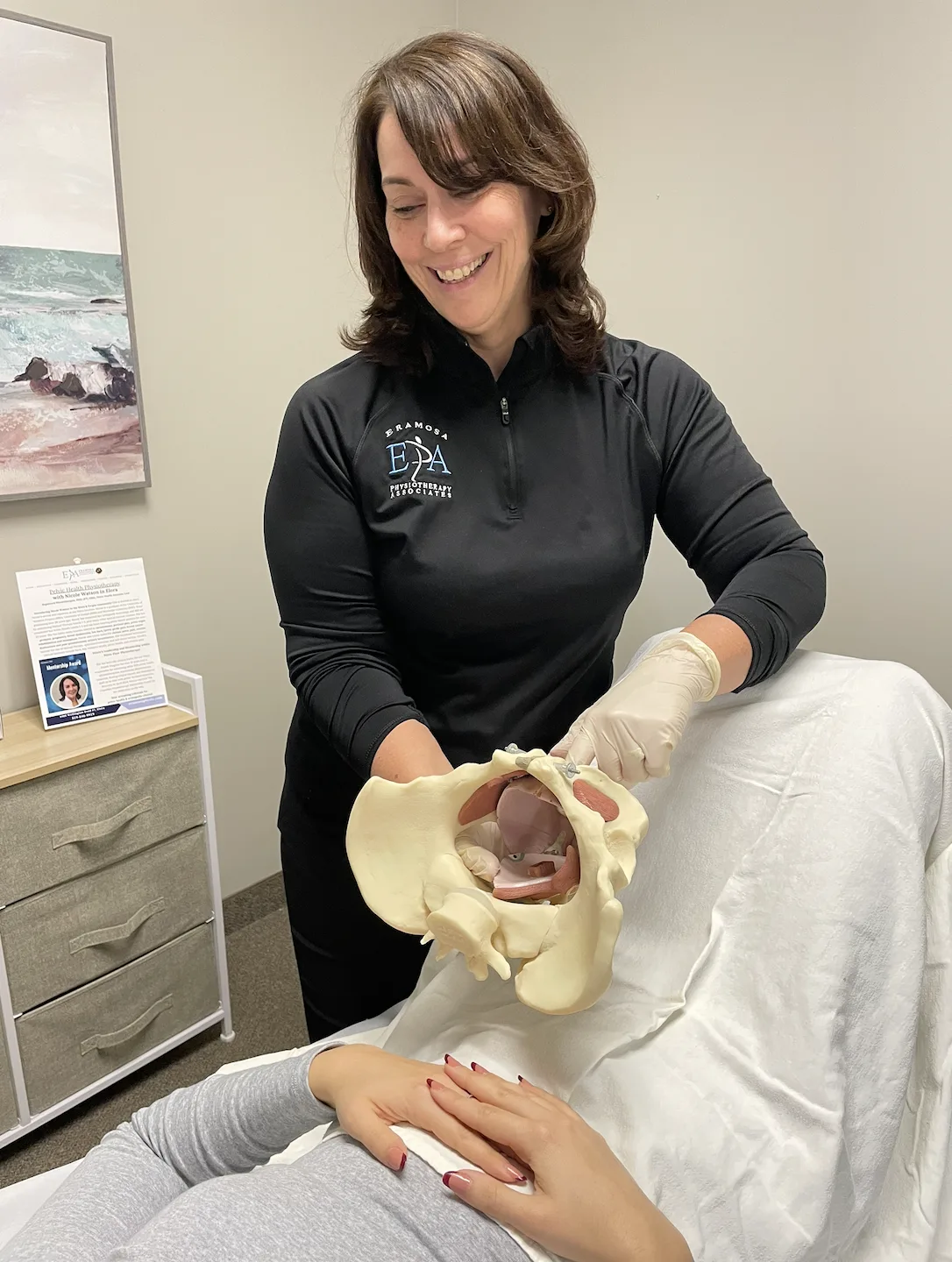
Common causes of pelvic pain
A number of factors can contribute to or accompany pelvic pain, including:
- Constipation, which can be both a cause and an effect of pelvic floor muscle dysfunction
- Sacroiliac (SI) joint dysfunction, which can lead to irritation in the lumbar spine and pelvic region
- Surgical trauma, which can change the strength and integrity of the pelvic floor musculature
- Psychological factors such as stress, anxiety, depression, reduced self-esteem, and decreased quality of life
Medical diagnoses for Pelvic Pain
Pelvic pain can stem from a number of specific conditions, including:
- Interstitial cystitis / painful bladder syndrome — pain, frequency, and urgency
- Endometriosis — tissue that lines the uterus grows outside of it, on other organs or structures in the body
- Myofascial trigger points (hypertonic muscles) — pain in the pelvic floor region, along with urinary urgency and frequency
- Vulvodynia — a broad category of pelvic pain that can include vestibulodynia (pain at the vestibule, or “front porch,” of the vagina), vulvodynia (pain in the superficial tissues of the vulva), and clitorodynia (pain at the clitoris)
- Dyspareunia and vaginismus — painful vaginal intercourse, or an inability to achieve penetration due to pain
- Pudendal neuralgia — irritation of the nerve that supplies the rectum, vagina or penis, perineum, and mons pubis, often aggravated by excessive sitting or activities like cycling
How we treat Pelvic Pain
Through our Path to Improved Health, we address the causes of your pelvic pain using:
- A comprehensive health history, along with an internal and external assessment of your pelvic region — including pelvic floor muscle tone, your ability to contract and relax the muscles, a biomechanical assessment of your lower back, hips, and sacroiliac joints, and an assessment of your abdomen for soft tissue dysfunction, including diastasis rectus abdominis
- Hands-on release or lengthening techniques to address tissue health in the pelvic floor region, followed by strengthening exercise once tissue health has improved
- Education on the progression of your strengthening and stretching exercises, as well as activities that can exacerbate your symptoms
- Persistent pain education, since the pelvic area is often where we hold stress — understanding how the pain system works can help reduce the threat of ongoing pelvic pain problems
- Therapeutic modalities when indicated, such as acupuncture, muscle stimulation, and biofeedback
- A home-based exercise program to maintain your progress after discharge, with follow-up support if your symptoms return or change
Recovery Timeline
Most pelvic pain improves steadily with treatment, and your physiotherapist will outline a realistic timeline based on your specific diagnosis at your first assessment. Your commitment is typically 2–3 visits a week for 40-minute sessions, along with progressive in-clinic and home exercises.
When Physiotherapy isn’t enough
If your pelvic pain isn’t improving in a timely manner based on your diagnosis, we will work with you and your healthcare provider to explore further assessment. And if your symptoms return or change after your care plan is complete, you’re always welcome back at the clinic.
Ready to Get Started?
Schedule Appointment
Book directly with the clinic and physiotherapist of your choice.
Related Articles
No posts found.
Try adjusting your query parameters.
What Our Patients Are Saying
What our patients are saying
Trusted by 2,000+ patients annually for over 30 years.
Frequently Asked Questions
Get your questions answered
Common questions about pelvic pain and physiotherapy. Still have questions? We’re happy to help.
No. Physiotherapists in Ontario are primary care providers, so you can book an assessment directly. Direct billing to most major insurers is also available at our clinics.
No. Pelvic pain is common, and pelvic health physiotherapists treat it every day. Your assessment is private, one-on-one, and moves at your pace — you’re never rushed into anything you’re not ready for.
Not necessarily. An internal assessment is one tool your physiotherapist may use to evaluate pelvic floor muscle tone and coordination, and it’s only ever performed with your informed consent. External assessment and treatment approaches are available if an internal exam isn’t right for you.
Treatment is tailored to what your assessment finds — often a combination of hands-on techniques to release tight or overactive pelvic floor muscles, targeted exercise, and education about the activities or positions that aggravate your symptoms. Pain-focused education is also part of the plan, since understanding how pain works can reduce its impact.
It depends on the underlying cause and how long you’ve been dealing with it. Your physiotherapist will give you a realistic timeline at your first assessment and adjust your plan as you progress.
Related conditions
You may also be dealing with
Ready to get started?
Your Recovery Begins Here
.
No Referral Needed.