
Patellar Tendinopathy (Jumper’s Knee) Treatment in Guelph & Wellington County
Also known as jumper’s knee, patellar tendinopathy causes pain at the front of the knee from overuse of the patellar tendon. Our physiotherapists help you unload the tendon, rebuild strength, and get back to the activities that matter to you.
. No Referral Needed.
Convenient billing available with most major insurers











If you don’t see your provider listed, give us a call to confirm. Learn more about convenient billing.
The patellar tendon connects the bottom of the kneecap to the top of the shin bone and is made up mostly of tightly packed collagen fibres. Patellar tendinopathy occurs when this tendon develops pathology — degeneration that causes pain at the front of the knee. Pain is often worse when there’s added load on the knee or increased demand on it to flex and extend. The condition is most common in younger people (ages 15–30), primarily athletes, and some evidence suggests it’s more common in males than females.
The most common symptom is anterior knee pain, usually near the bottom of the kneecap, that worsens with activity and potentially with prolonged knee flexion. Pain can also worsen with prolonged sitting, squatting, and climbing or descending stairs. A hallmark sign of patellar tendinopathy is pain that shows up specifically when there’s a load on the knee and eases once the load is removed.
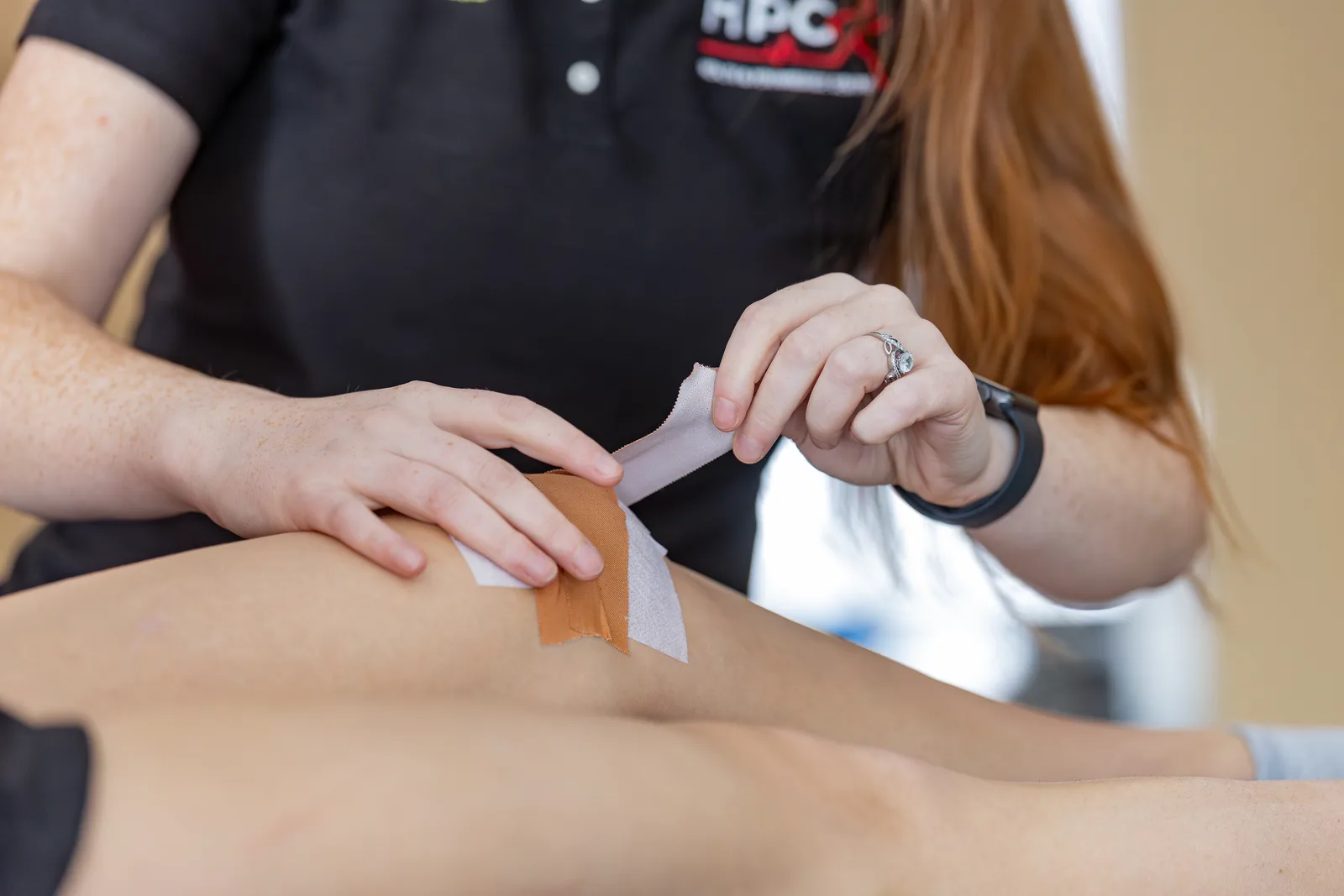
Common causes of Patellar Tendinopathy
The main cause of patellar tendinopathy is tendon overload from repetitive, heavy loading:
- Tendon overload from repetitive, heavy loading — everyday activities like stair climbing can place a load on the patellar tendon of up to three times your body weight
- Repeated loading that outpaces the tendon’s ability to repair, causing microtrauma to build up and the tendon to develop degenerative changes
- Sports involving jumping — often called ‘jumper’s knee’ — including basketball, volleyball, football, track and field, and soccer
- Demographic factors: most common in younger people (ages 15–30), primarily athletes, with some evidence suggesting greater prevalence in males than females
How we treat Patellar Tendinopathy
The first step in treating patellar tendinopathy is correcting the activities causing the overload — for example, pausing jumping-related activities and avoiding movements that load the knee heavily, so the tendon has a chance to heal. After this initial ‘unloading’ period to reduce pain and promote healing, treatment moves to a slow, gradual return to loading to maintain the tendon’s structure and remodel the collagen.
- Strengthening the quadriceps muscles
- Correcting biomechanical issues in the lower limb, such as knock knees (genu valgum) or a high foot arch (over-supination), that add load to the knee
- A gradual, monitored return to loading and jumping activity once symptoms settle, to rebuild the tendon’s capacity without provoking a flare-up
Recovery Timeline
Patellar tendinopathy typically responds to a structured unloading and gradual reloading program, and your physiotherapist will outline a realistic timeline based on your specific diagnosis at your first assessment. Your commitment is typically 2–3 visits a week for 20–30 minutes, along with progressive in-clinic and home exercises.
When Physiotherapy isn’t enough
Most patellar tendinopathy improves with a structured loading-management program and doesn’t require surgery. If your symptoms aren’t responding as expected, we will work with you and your family doctor to explore further assessment or imaging.
Ready to Get Started?
Schedule Appointment
Book directly with the clinic and physiotherapist of your choice.
Related Articles
No posts found.
Try adjusting your query parameters.
What Our Patients Are Saying
What our patients are saying
Trusted by 2,000+ patients annually for over 30 years.
Frequently Asked Questions
Get your questions answered
Common questions about patellar tendinopathy and physiotherapy. Still have questions? We’re happy to help.
No. Physiotherapists in Ontario are primary care providers, so you can book an assessment directly. Direct billing to most major insurers is also available at our clinics.
Yes. Patellar tendinopathy is commonly known as jumper’s knee, especially in athletes whose sports involve jumping, such as basketball, volleyball, football, track and field, and soccer.
Usually not completely, but you’ll need to pause jumping-related and heavily loading activities for a period so the tendon can heal. Your physiotherapist guides you through this ‘unloading’ phase and then a gradual, monitored return to loading.
Usually not. A physical examination of your knee and lower limb is typically enough to diagnose patellar tendinopathy. Ultrasound imaging can help confirm the diagnosis in some cases, but it isn’t usually required.
It depends on how the tendon responds to unloading and how quickly you can progress your reloading program. Your physiotherapist will give you a timeline specific to your presentation and adjust it as your symptoms and strength improve.
Related conditions
You may also be dealing with
Ready to get started?
Your Recovery Begins Here
.
No Referral Needed.