
Patellofemoral Pain Syndrome Treatment in Guelph & Wellington County
Squatting, running, or climbing stairs shouldn’t flare up pain at the front of your knee, but if it does, patellofemoral pain syndrome could be the cause. Our physiotherapists track down what’s driving your pain and put together treatment to rebalance and stabilize your knee.
. No Referral Needed.
Convenient billing available with most major insurers











If you don’t see your provider listed, give us a call to confirm. Learn more about convenient billing.
The knee has two major joints: the tibiofemoral joint and the patellofemoral joint, which is the one affected in patellofemoral pain syndrome (PFPS). Normally, the kneecap (patella) glides smoothly within a groove in the thigh bone as the knee bends and straightens — a movement called patellar tracking. When the patella doesn’t track properly within that groove, pain can result.
PFPS is an umbrella term for pain coming from the patellofemoral joint and the tissues around it. It’s a chronic condition that typically worsens with squatting, sitting, going up and down stairs, and running. Pain is usually felt at the front of the knee but can spread around the whole joint. PFPS is most common in young adults, particularly females, and is more prevalent among athletes.
Your physiotherapist will start by asking how your pain behaves — when it began, what it feels like, and what makes it better or worse — to help narrow down the diagnosis. A physical exam typically follows, assessing the location of your pain along with your stability, muscle strength, flexibility, and lower body alignment to guide your treatment plan.
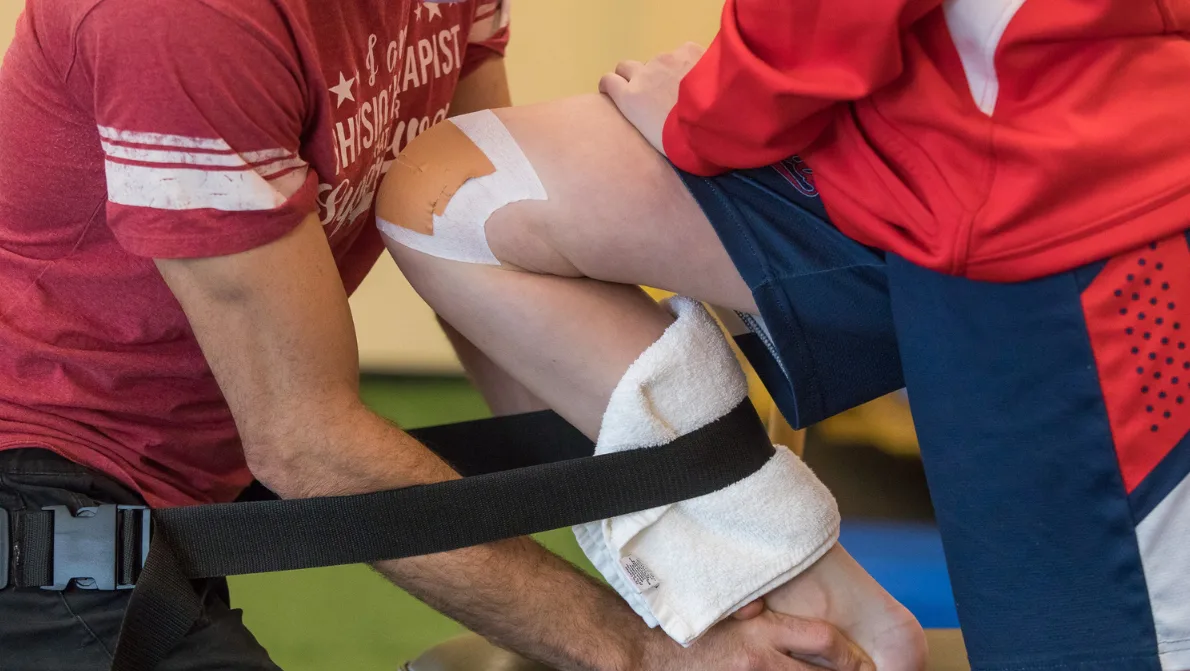
Common causes of Patellofemoral Pain Syndrome
PFPS often comes down to the kneecap not tracking properly within the trochlear groove. A few things can contribute:
- Muscular imbalance in the quadriceps, particularly delayed activation of the vastus medialis muscle, or other biomechanical factors that misalign the patella
- A sudden increase in vigorous activity that puts stress on the knee joint, especially if a patellar misalignment already exists
- Foot alignment: pes planus (overpronation) and pes cavus (oversupination) can both put extra stress on the patellofemoral joint
- Demographic factors: PFPS is most common in young adults, particularly females, and more prevalent among athletes
How we treat Patellofemoral Pain Syndrome
Treatment for PFPS focuses on strengthening the hip, thigh, and foot, with targeted physiotherapy to rebalance the quadriceps muscles and stabilize the patella.
- Lower extremity strengthening and stretching
- Taping
- Bracing
- Dry needling
- Orthotics
- Muscle stim
Recovery Timeline
Most cases of patellofemoral pain syndrome improve steadily with treatment, and your physiotherapist will outline a realistic timeline based on your specific diagnosis at your first assessment. Your commitment is typically 2–3 visits a week for 20–30 minutes, along with progressive in-clinic and home exercises.
When Physiotherapy isn’t enough
If your knee pain isn’t improving in a timely manner based on your diagnosis, we will work with you and your family doctor to explore further assessment or imaging. Most patellofemoral pain syndrome is managed successfully without surgery.
Ready to Get Started?
Schedule Appointment
Book directly with the clinic and physiotherapist of your choice.
Related Articles
No posts found.
Try adjusting your query parameters.
What Our Patients Are Saying
What our patients are saying
Trusted by 2,000+ patients annually for over 30 years.
Frequently Asked Questions
Get your questions answered
Common questions about patellofemoral pain syndrome and physiotherapy. Still have questions? We’re happy to help.
No. Physiotherapists in Ontario are primary care providers, so you can book an assessment directly. Direct billing to most major insurers is also available at our clinics.
Most people notice pain at the front of the knee, around or behind the kneecap, that gets worse with squatting, sitting for long periods with the knee bent, or going up and down stairs. Some people also notice popping or crackling sounds during movement.
PFPS is most common in young adults, particularly females, and tends to show up more often in athletes. That said, it can affect anyone whose kneecap isn’t tracking properly within its groove.
In many cases, yes, with some modification. Your physiotherapist will identify which activities to adjust and build a strengthening program so you can return to running and sport comfortably.
Usually not right away. A physical assessment of your pain pattern, strength, flexibility, and alignment is typically enough to guide treatment. If your symptoms aren’t responding as expected, we’ll work with your family doctor on next steps.
Related conditions
You may also be dealing with
Ready to get started?
Your Recovery Begins Here
.
No Referral Needed.