
Disc Herniation or Bulge Treatment in Guelph & Wellington County
From a mild disc bulge to a full herniation, our physiotherapists pinpoint the stage of your disc injury, then design treatment to ease the pressure on your nerve and get you moving comfortably again.
. No Referral Needed.
Convenient billing available with most major insurers











If you don’t see your provider listed, give us a call to confirm. Learn more about convenient billing.
A bulging disc is a bit like letting the air out of a car tire: the disc sags and looks like it’s bulging outward. This is typically considered the first of four stages of a herniated disc. As a herniated disc progresses, the outer covering of the disc can develop a hole or tear, allowing the jelly-like centre of the disc (the nucleus pulposus) to leak into the spinal canal. This can push on a nerve and cause symptoms anywhere from the lower back down to the toes.
Symptoms of a disc herniation or bulge can include lower back pain that worsens with movement, particularly forward bending, and pain that’s worse with sitting. Some people also experience nerve pain: sharp, searing, electrical-shock-like sensations that can radiate down the leg. In extreme cases, the nerves supplying the muscles in the feet can become compressed, leading to foot drop, or a loss of control of the foot.
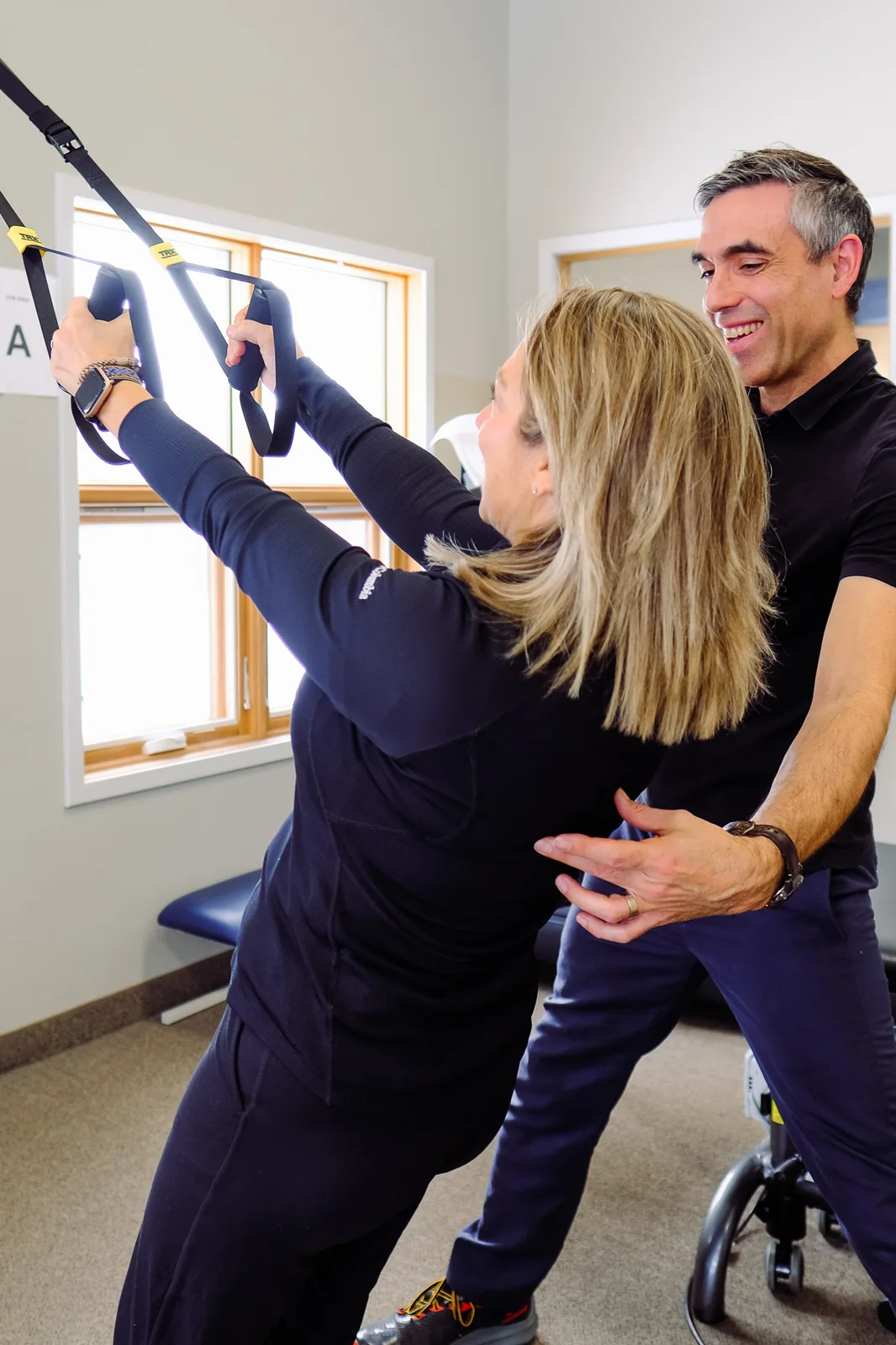
Common causes of Disc Herniation or Bulge
Disc herniations are most often the result of gradual, progressive degeneration, though some people experience a single traumatic event involving excessive strain or compression of the disc. Contributing factors can include:
- Gradual, progressive disc degeneration over time
- A single traumatic event involving excessive strain or compression of the disc
- Heavy lifting or repeated bending and twisting that place extra load on the disc
- Poor lifting technique or prolonged awkward postures that increase pressure on the spine
Medical diagnoses for Disc Herniation or Bulge
There are four progressive stages of disc herniation. Diagnosis typically involves a thorough assessment, including your injury history, symptom profile, past medical history, and details about your home, work, and exercise life, followed by a physical exam that checks range of motion, nerve function, and the lumbar spine directly. If there’s still uncertainty after this assessment, an MRI is often considered the gold standard, though it isn’t necessary to begin treatment. In fact, studies show there are as many people with disc herniations visible on MRI as there are people who are completely pain-free, so physicians may wait before referring you for one.
- Disc degeneration — the first of four progressive stages of disc herniation
- Disc prolapse — the second of four progressive stages of disc herniation
- Disc extrusion — the third of four progressive stages of disc herniation
- Disc sequestration — the fourth and most advanced stage of disc herniation
How we treat Disc Herniation or Bulge
Generally speaking, most people never need surgery for a disc herniation and recover with a combination of medication and physical therapy. Treatment options may include:
- A gentle exercise program to stabilize the spine
- Mobilization of the spine
- Modalities to relieve pain, such as acupuncture, heat, or ice
- Medication, generally starting with oral options and, in some cases, progressing to cortisone injections or nerve blocks
Recovery Timeline
Most people improve steadily with a combination of physiotherapy and, when needed, medication, and your physiotherapist will outline a realistic timeline based on the stage and severity of your disc injury at your first assessment. Your commitment is typically 2–3 visits a week for 20–30 minutes, along with progressive in-clinic and home exercises.
When Physiotherapy isn’t enough
In extreme cases — most often when non-surgical care hasn’t relieved your symptoms, or if you develop new weakness in your leg or foot — a surgical consult may be appropriate. Most surgical cases (about 90%) are treated with a microdiscectomy, a minimally invasive procedure to remove the protruding portion of the disc; in rare cases, the disc is removed entirely and the two vertebrae are fused. The vast majority of people, however, recover with a combination of medication and physical therapy alone.
Ready to Get Started?
Schedule Appointment
Book directly with the clinic and physiotherapist of your choice.
Related Articles
No posts found.
Try adjusting your query parameters.
What Our Patients Are Saying
What our patients are saying
Trusted by 2,000+ patients annually for over 30 years.
Frequently Asked Questions
Get your questions answered
Common questions about disc herniation and physiotherapy. Still have questions? We’re happy to help.
No. Physiotherapists in Ontario are primary care providers, so you can book an assessment directly. Direct billing to most major insurers is also available at our clinics.
A bulging disc is like a car tire losing air — the disc sags outward but its outer covering is still intact. It’s typically considered the first of four stages of a herniated disc. As a herniation progresses, that outer covering can develop a tear, allowing the jelly-like centre of the disc to leak into the spinal canal and press on a nearby nerve.
Not necessarily. Your physiotherapist can usually identify a disc herniation through your history and a physical exam. An MRI is often considered the gold standard when there’s still uncertainty, but studies show there are as many people with herniated discs visible on MRI as there are people with no pain at all — so it isn’t required to start treatment.
Most people don’t. The majority of disc herniations respond well to physiotherapy and, if needed, medication. When surgery is appropriate, a microdiscectomy — a minimally invasive procedure to remove the protruding portion of the disc — is the most common option, used in about 90% of surgical cases.
Foot drop is a loss of control of the foot that can happen in extreme cases when a compressed nerve affects the muscles that lift your foot. If you notice new weakness in your foot or leg, let your physiotherapist or family doctor know right away so it can be assessed promptly.
Related conditions
You may also be dealing with
Ready to get started?
Your Recovery Begins Here
.
No Referral Needed.