
Sciatica Treatment in Guelph & Wellington County
Burning, tingling, or shooting pain down your leg often points to sciatica. Our physiotherapists track down the root cause and put together treatment to take the pressure off the nerve.
. No Referral Needed.
Convenient billing available with most major insurers











If you don’t see your provider listed, give us a call to confirm. Learn more about convenient billing.
Sciatica is pain that starts in the lower back or gluteal region and travels down the leg along the path of the sciatic nerve. It’s typically one-sided, though it can occasionally be felt in both legs. Sciatica is a symptom that can be caused by several different conditions, including disc herniation, piriformis syndrome, and spinal stenosis, among others, but whatever the root cause, compression of the sciatic nerve is what leads to pain, burning, and other symptoms.
Symptoms of sciatica can include pain, burning, numbness, pins and needles, tingling, and sensations of electric shocks.
Sciatica can be easily diagnosed by a physiotherapist, physician, or other qualified healthcare provider. Because it’s a symptom of an underlying problem, a comprehensive assessment is important so the root cause can be treated appropriately. You don’t need an MRI to start treatment, and in many cases an MRI won’t provide extra information or change your course of treatment.
Common causes of Sciatica
Because sciatica is a symptom rather than a diagnosis on its own, it can have its root cause in several different injuries or conditions. It can be caused by:
- An acute injury or trauma to the lower back
- Repetitive movements
- Lifting with improper posture
- Prolonged sitting
- Weakness in certain muscles
- Arthritis and degenerative changes to the spinal bones
How we treat Sciatica
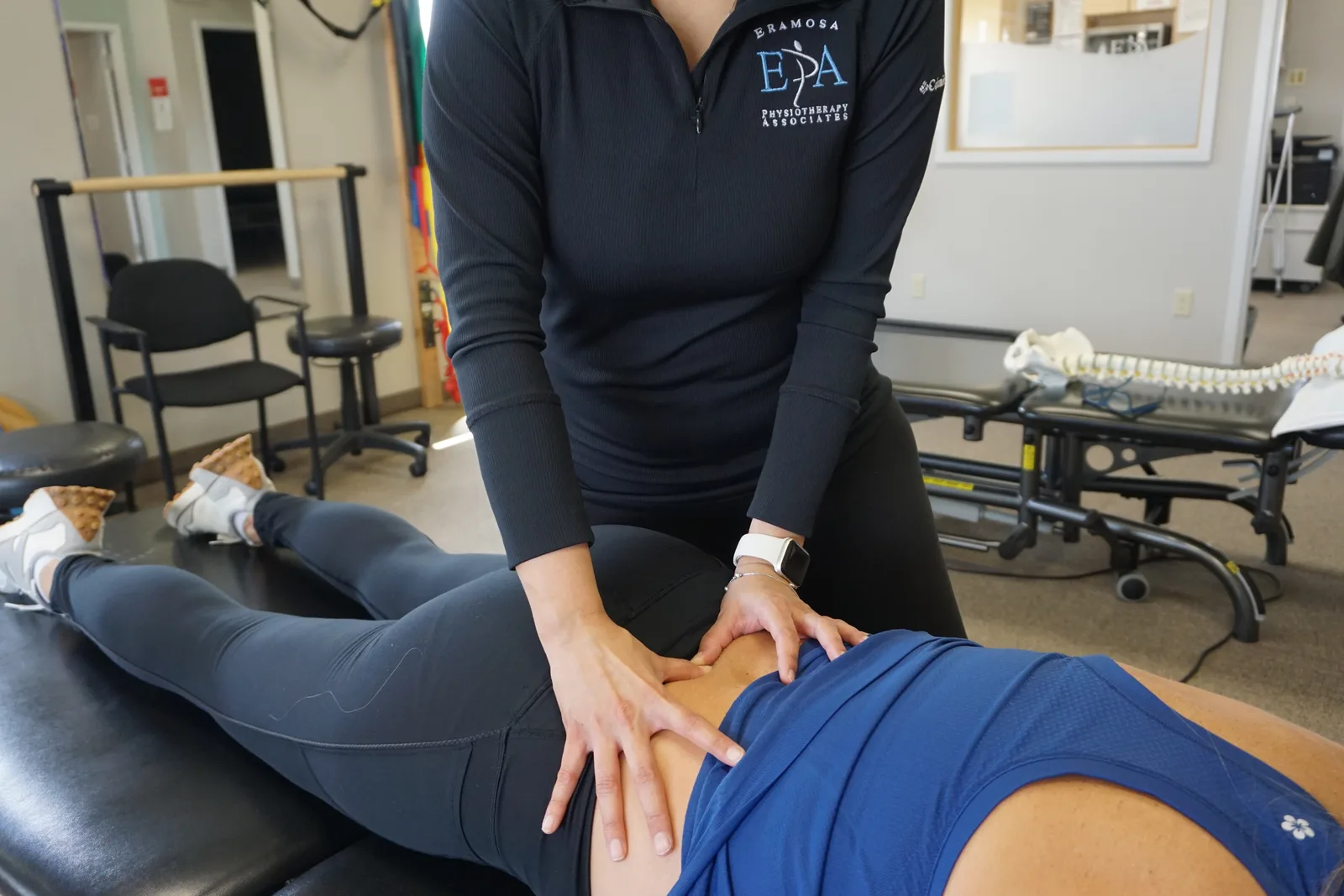
Treating sciatica depends on accurately diagnosing the underlying root cause. Once diagnosed, most causes respond well to a combination of physiotherapy treatments, including:
- Joint mobilizations
- Spinal traction
- Soft tissue massage of tight musculature
- Core stability exercises
- Stretching of tight muscles and joints
- Modalities to decrease muscle tone and pain, such as acupuncture
Recovery Timeline
Most sciatica improves steadily once the underlying cause is identified and treated, and your physiotherapist will outline a realistic timeline based on your diagnosis at your first assessment. Your commitment is typically 2–3 visits a week for 20–30 minutes, along with progressive in-clinic and home exercises.
When Physiotherapy isn’t enough
Spinal surgery is always considered a last resort for sciatica. If your pain is predominantly in your legs and an MRI has shown a significant lesion, such as a herniated disc pinching the nerve, spinal surgery may be an option. Before exploring any surgical options, surgeons in Ontario will always recommend a course of at least 8 weeks of rehabilitation, such as physiotherapy.
Ready to Get Started?
Schedule Appointment
Book directly with the clinic and physiotherapist of your choice.
Related Articles
No posts found.
Try adjusting your query parameters.
What Our Patients Are Saying
What our patients are saying
Trusted by 2,000+ patients annually for over 30 years.
Frequently Asked Questions
Get your questions answered
Common questions about sciatica and physiotherapy. Still have questions? We’re happy to help.
No. Physiotherapists in Ontario are primary care providers, so you can book an assessment directly. Direct billing to most major insurers is also available at our clinics.
Not always. Sciatica is a symptom, not a diagnosis on its own, and it can be caused by several different conditions — including disc herniation, piriformis syndrome, and spinal stenosis, among others. Your assessment identifies the underlying cause so your treatment plan targets the right structure.
Not to start treatment. A thorough assessment by your physiotherapist is usually enough to identify the underlying cause and begin treatment. In many cases, an MRI doesn’t provide extra information or change your course of care.
It can, though it’s uncommon. Sciatica is typically one-sided, but some people experience symptoms in both legs at once. Either way, a comprehensive assessment identifies what’s driving your symptoms.
Spinal surgery is always a last resort. It may become an option if your pain is predominantly in your leg and an MRI shows a significant lesion, such as a herniated disc pinching the nerve — but surgeons in Ontario will typically recommend at least 8 weeks of physiotherapy first.
Related conditions
You may also be dealing with
Ready to get started?
Your Recovery Begins Here
.
No Referral Needed.