
Degenerative Disc Disease Treatment in Guelph & Wellington County
As the discs between your spinal bones wear down over time, our physiotherapists help relieve pressure on the surrounding bones and nerves and keep you moving comfortably.
. No Referral Needed.
Convenient billing available with most major insurers











If you don’t see your provider listed, give us a call to confirm. Learn more about convenient billing.
Degenerative Disc Disease (DDD), sometimes also called osteoarthritis, occurs when the discs that separate the bones in your spine begin to wear away. It generally starts in adults around age 40, but can occur sooner depending on your activity, work, or sporting pursuits.
Symptoms of DDD can include pain in the lower back, buttocks, and/or upper thighs that comes and goes depending on activity and position, and that feels worse when you bend, move, lift, or twist. Pain typically improves when you lie down, and in extreme cases there may also be numbness and tingling down the legs.
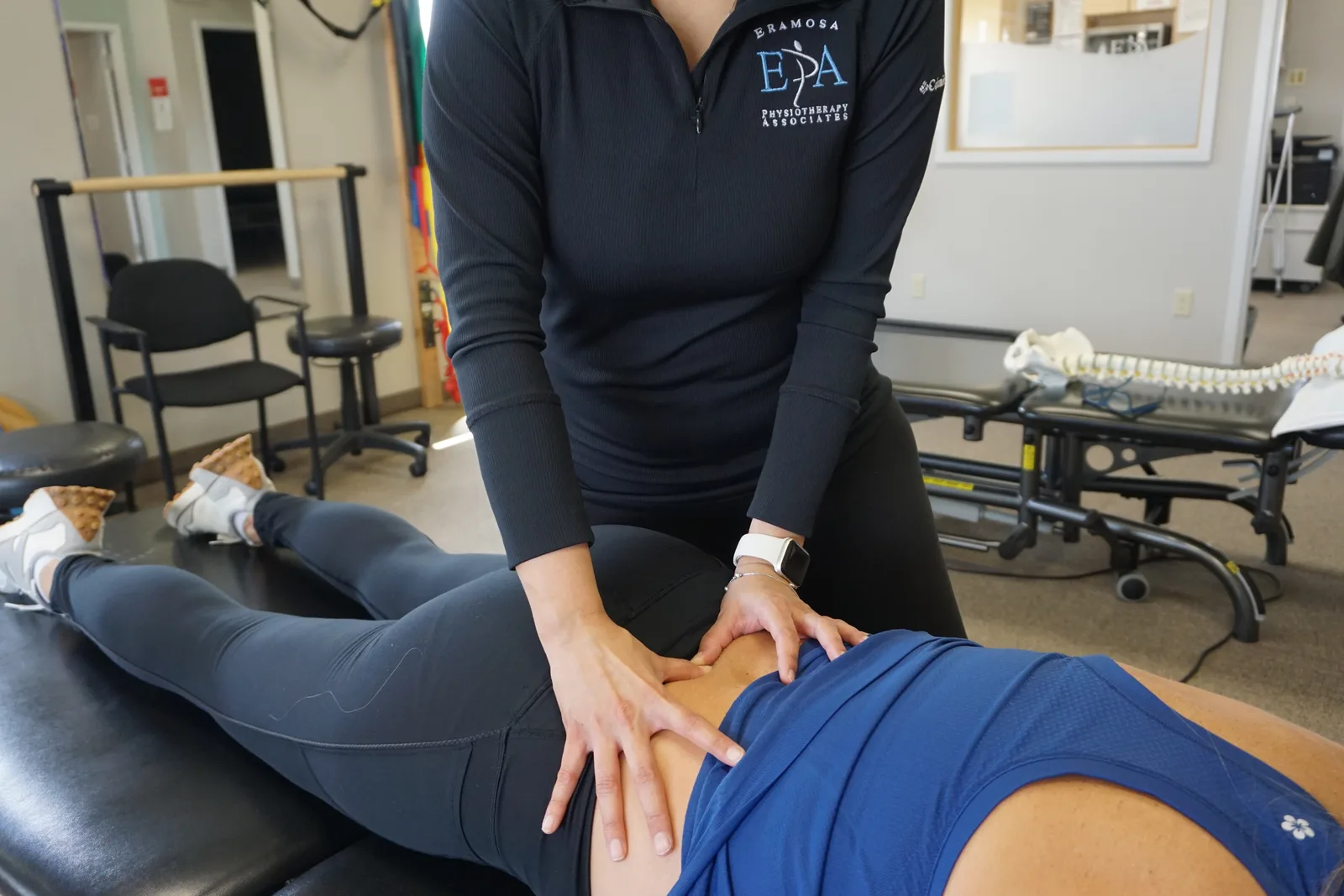
Common causes of Degenerative Disc Disease
DDD is the result of gradual, progressive changes in the spine, though it can be accelerated by trauma such as a motor vehicle accident, a fall, or overuse in your occupation. It’s a common condition, affecting about 4 out of 5 people by the time they reach 80.
- Gradual, progressive changes in the spine that occur with age
- Trauma from a motor vehicle accident
- Trauma from a fall
- Overuse in your occupation
Medical diagnoses for Degenerative Disc Disease
In Ontario, DDD is often diagnosed with a simple X-ray, though an MRI may be used for a more complete, three-dimensional view. DDD progresses through four phases:
- Phase I — may go unnoticed. Marked by an early loss of the spine’s normal curvature, with minimal associated pain
- Phase II — further loss of disc height, a more pronounced change in posture, and increased pain. Research shows this occurs in 40% of men and women by age 40, and 80% by age 80
- Phase III — postural issues are exacerbated and structural changes such as bone spurs (osteophytes) can develop, pinching nerves as they exit the spine and causing pain that radiates into the lower back and/or down the legs
- Phase IV — the discs are severely degraded. Spinal stenosis may cause excessive pain that can radiate down one or both legs, and spondylolisthesis and severe inflammation/osteoarthritis are also common at this stage
How we treat Degenerative Disc Disease
The goals of treatment for DDD are different from other areas of the body: treatment can’t reverse the degenerative changes in the spine, so it focuses on improving the surrounding tissues and structures to take pressure off the aggravated bones and nerves. This is done through:
- Spinal and core strengthening programs
- Spinal mobilization to open up the joint space
- Stretching tight structures to improve range of motion
- A gradual return to your regular activities
- Modalities to decrease pain, such as acupuncture, hot packs, traction, and ice packs
Recovery Timeline
Every case of DDD looks different, and your physiotherapist will outline a realistic timeline based on your specific stage and symptoms at your first assessment. Your commitment is typically 2–3 visits a week for 20–30 minutes, along with progressive in-clinic and home exercises to manage pain and support long-term function.
When Physiotherapy isn’t enough
Physiotherapy can’t reverse the degenerative changes in your spine, but most people manage their symptoms well without surgery. In extreme cases, a surgeon may consider a lumbar spinal fusion as a last resort, only after less invasive treatments such as physiotherapy have been tried; replacement of the lumbar disc with an artificial disc is an alternative, though it’s rarely done in Canada.
Ready to Get Started?
Schedule Appointment
Book directly with the clinic and physiotherapist of your choice.
Related Articles
No posts found.
Try adjusting your query parameters.
What Our Patients Are Saying
What our patients are saying
Trusted by 2,000+ patients annually for over 30 years.
Frequently Asked Questions
Get your questions answered
Common questions about degenerative disc disease and physiotherapy. Still have questions? We’re happy to help.
No. Physiotherapists in Ontario are primary care providers, so you can book an assessment directly. Direct billing to most major insurers is also available at our clinics.
DDD and spinal osteoarthritis are closely related, and the term is sometimes used interchangeably — both describe wear of the discs and joints in the spine over time. Your assessment identifies exactly which structures are involved so treatment can target them.
No, and no treatment can reverse the degenerative changes themselves. What physiotherapy can do is take pressure off the aggravated bones and nerves by strengthening and mobilizing the surrounding structures, which meaningfully reduces pain and improves function.
In Ontario, DDD is often diagnosed with a simple X-ray. An MRI may be used if a more complete, three-dimensional view of the spine is needed.
Most people don’t. Surgery — typically a lumbar spinal fusion — is only considered in extreme cases and after less invasive treatments like physiotherapy have been tried. It’s a true last resort, and an artificial disc replacement is rarely done in Canada.
Related conditions
You may also be dealing with
Ready to get started?
Your Recovery Begins Here
.
No Referral Needed.