
Plantar Fasciitis Treatment in Guelph & Wellington County
Plantar fasciitis causes pain in the bottom of the heel or foot, often most noticeable with your first steps in the morning. Our physiotherapists trace the underlying cause and map out treatment so you can move without pain. No referral required.
. No Referral Needed.
Convenient billing available with most major insurers











If you don’t see your provider listed, give us a call to confirm. Learn more about convenient billing.
Plantar fasciitis is a common condition causing pain in the bottom of the heel or foot, often most noticeable with the first steps in the morning or after periods of rest.
The plantar fascia is a thick band of tissue that runs along the bottom of your foot, connecting your heel to your toes and supporting your arch with every step. When it’s placed under repeated strain — from footwear, activity changes, or restricted movement elsewhere in the leg — small tears and irritation can develop, and pain tends to build gradually rather than appear all at once.
Because the true source of plantar fasciitis isn’t always the foot itself — a stiff ankle, a restricted big toe, or a knee that won’t fully straighten can all play a role — our physiotherapists assess the whole kinetic chain to find what’s driving your pain, not just where it hurts.
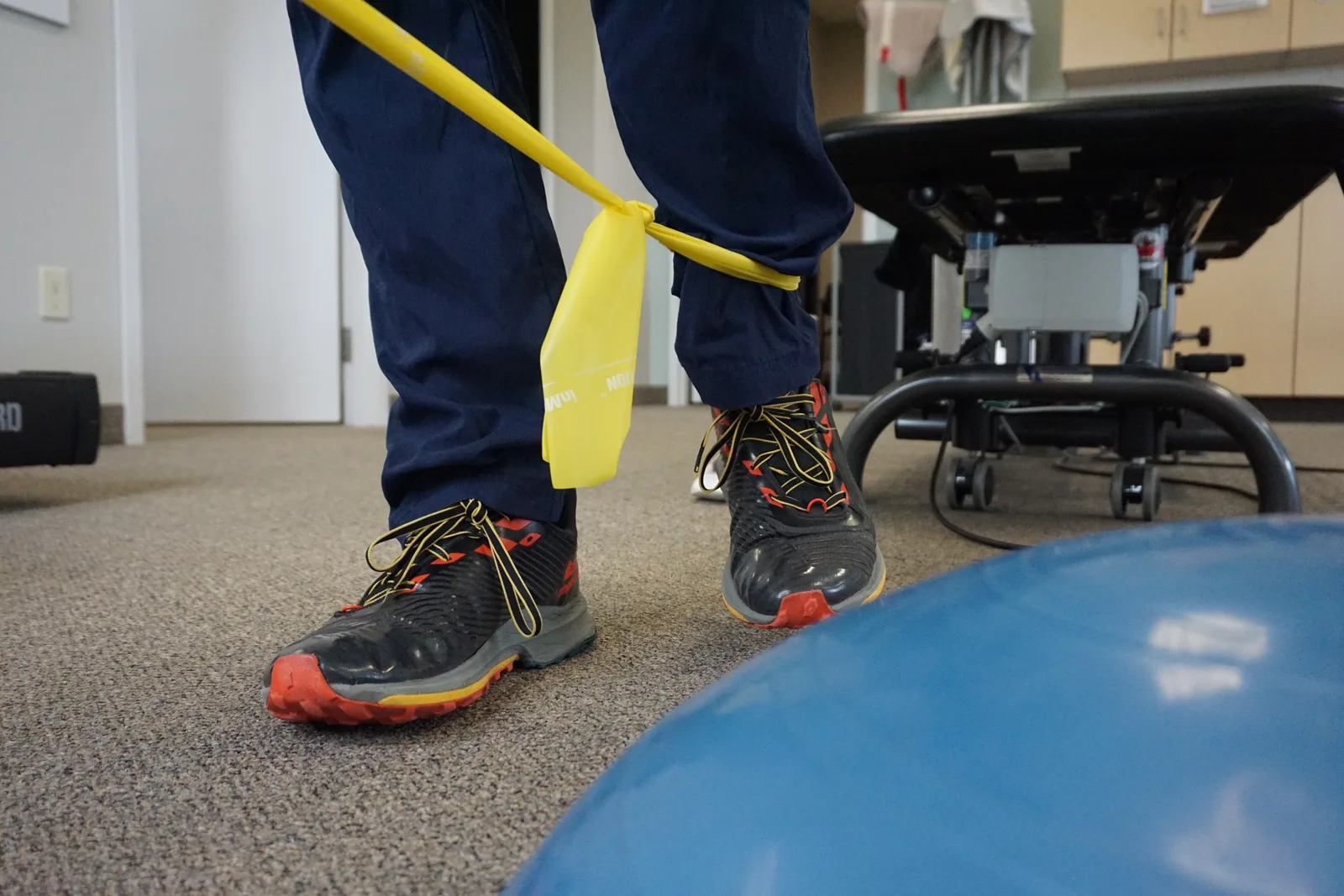
Common causes of Plantar Fasciitis
Plantar fasciitis can develop for a number of reasons, including:
- Loss of movement in the heel bone or ankle joint, such as from a chronic ankle sprain left untreated
- Arthritis in the big toe
- Loss of full knee extension, often from a chronic knee injury
- Poor footwear or wearing unsupportive or worn-out running shoes
- A sudden change in footwear, such as switching to flip flops for the season
- Starting a new activity such as running, increased walking, or a change in terrain (like walking on the beach)
How we treat Plantar Fasciitis
Treatment options for plantar fasciitis include:
- Manual therapy or mobilization of any joints with restricted movement (ankle, heel bone, big toe, or knee)
- Soft tissue manual techniques to lengthen the plantar fascia
- Education and active stretching, particularly first thing in the morning
- Active exercises focused on the calf, with an emphasis on eccentric strengthening
- Modalities such as ultrasound, acupuncture, and shockwave therapy
- Short-term taping to offload the plantar fascia, with orthotic consultation where appropriate
Recovery Timeline
Most cases of plantar fasciitis improve steadily with treatment, and your physiotherapist will outline a realistic timeline based on your specific presentation at your first assessment. Your commitment is typically 2–3 visits a week for 20–30 minutes, along with progressive in-clinic and home exercises including stretching and eccentric strengthening.
When Physiotherapy isn’t enough
If your plantar fasciitis pain isn’t improving with treatment, or if you notice increasing swelling, numbness, or signs of a possible stress fracture, we will work with you and your healthcare provider to explore further assessment, imaging, or a referral to a specialist.
Ready to Get Started?
Schedule Appointment
Book directly with the clinic and physiotherapist of your choice.
Related Articles
No posts found.
Try adjusting your query parameters.
What Our Patients Are Saying
What our patients are saying
Trusted by 2,000+ patients annually for over 30 years.
Frequently Asked Questions
Get your questions answered
Common questions about plantar fasciitis and physiotherapy. Still have questions? We’re happy to help.
No. Physiotherapists in Ontario are primary care providers, so you can book an assessment directly. Direct billing to most major insurers is also available at our clinics.
It depends on how long you’ve had symptoms and what’s driving them — a stiff ankle, a restricted big toe, or footwear changes can all play a role. Your physiotherapist will give you a realistic timeline at your first assessment based on your specific presentation.
Yes. Shockwave therapy is one of the modalities we may use for plantar fasciitis, alongside manual therapy, stretching, and eccentric strengthening. Your physiotherapist will discuss whether it’s appropriate as part of your treatment plan.
Morning heel pain is one of the most recognizable features of plantar fasciitis — the fascia tightens overnight and is put under sudden load with your first steps. This pattern is one of the things your physiotherapist looks for during assessment.
In most cases, yes, with some modification. Complete rest isn’t usually the answer. Your physiotherapist will help you adjust your activity and footwear while your treatment plan addresses the underlying cause.
Related conditions
You may also be dealing with
Ready to get started?
Your Recovery Begins Here
.
No Referral Needed.