
Ankle & Foot Pain Treatment in Guelph and Wellington County
Whether it’s a sprain, an overuse injury, or ongoing joint irritation, our physiotherapists help identify the source of your ankle and foot pain and build a plan to keep you moving. No referral required.
. No Referral Needed.
Convenient billing available with most major insurers











If you don’t see your provider listed, give us a call to confirm. Learn more about convenient billing.
Sprains, overuse injuries, plantar fasciitis, and joint irritation can all lead to ankle and foot pain, whether it’s a nagging ache or something that limits how much time you can spend on your feet. Everyday activities like walking and standing often become more difficult as a result.
Your ankles and feet are under constant stress while you’re weight-bearing, and the joints, tendons, and ligaments involved allow for a wide range of movement and shock absorption. When an ankle sprain or foot injury isn’t treated properly the first time, it can become a recurring problem — or lead to compensations further up the kinetic chain.
Our physiotherapists identify the source of your ankle or foot pain, whether it’s a recent injury or a longstanding issue, and build a treatment plan around it.
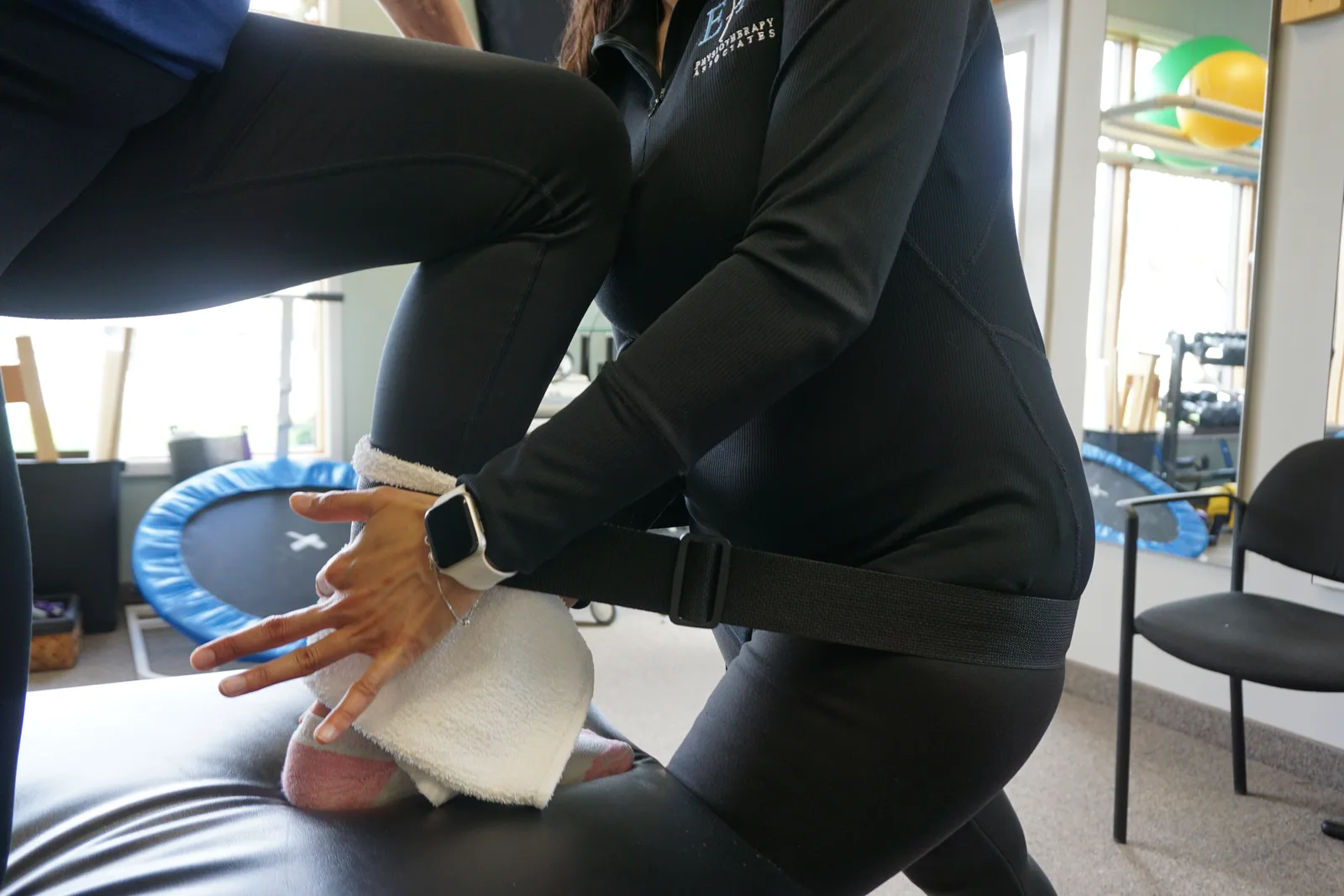
Common causes of ankle and foot pain
Your feet and ankles absorb impact with every step, so pain here can come from a single injury or from repetitive stress that builds up over time. Common causes of ankle and foot pain include:
- Ankle sprains from rolling or twisting the ankle on uneven terrain
- Plantar fasciitis from repetitive strain on the tissue along the bottom of the foot
- Achilles tendon irritation, overuse, or rupture
- Improper or unsupportive footwear
- Flat or over-pronated feet that change how load moves through the foot and ankle
- Stress fractures from repetitive impact, particularly in running or jumping sports
- Arthritis, most commonly in the great toe
Medical diagnoses for ankle and foot pain
Ankle and foot pain can stem from several specific medical conditions. Each one has its own causes, symptoms, and treatment considerations — and identifying the right one shapes your treatment plan:
- Ankle sprain — stretching or tearing of the ligaments that stabilize the ankle, usually from a rolling or twisting injury
- Plantar fasciitis — irritation of the tissue along the bottom of the foot, often causing sharp heel pain with the first steps in the morning
- Achilles tendinopathy — overload or degeneration of the Achilles tendon, common in running and jumping activities
- Heel spurs — a bony growth on the heel bone, often associated with longstanding plantar fasciitis
- Great toe arthritis (hallux rigidus) — degenerative changes in the big toe joint that limit movement and cause pain, especially when pushing off
- Stress fractures — small cracks in a foot or ankle bone from repetitive impact, common in running and jumping sports
- Fractures of the ankle or foot — following significant trauma; these require medical assessment before physiotherapy begins
How we treat Ankle & Foot Pain
Our approach to ankle and foot pain is built around orthopaedic physiotherapy, tailored to your specific symptoms and goals. Through our Path to Improved Health, treatment may include:
- Hands-on manual therapy and joint mobilization to restore ankle and foot movement
- Targeted strengthening and balance exercises to support the ankle and reduce re-injury risk
- Shockwave therapy for stubborn plantar fasciitis or Achilles tendon irritation
- Footwear and orthotic guidance to reduce repetitive strain
- Education on activity modification and gradual return to running or sport
Recovery Timeline
Most episodes of ankle and foot pain improve steadily with treatment, and your physiotherapist will outline a realistic timeline based on your specific diagnosis at your first assessment. Your commitment is typically 2–3 visits a week for 20–30 minutes, along with progressive in-clinic and home exercises.
When Physiotherapy isn’t enough
If your ankle or foot pain isn’t improving in a timely manner based on your diagnosis — or you’re unable to bear weight, or notice significant swelling or deformity following an injury — we will work with you and your healthcare provider to explore further medical assessment or imaging.
Ready to Get Started?
Schedule Appointment
Book directly with the clinic and physiotherapist of your choice.
Related Articles
No posts found.
Try adjusting your query parameters.
What Our Patients Are Saying
What our patients are saying
Trusted by 2,000+ patients annually for over 30 years.
Frequently Asked Questions
Get your questions answered
Common questions about ankle and foot pain and physiotherapy. Still have questions? We’re happy to help.
No. Physiotherapists in Ontario are primary care providers, so you can book an assessment directly. Direct billing to most major insurers is also available at our clinics.
It depends on the diagnosis, how long you’ve had the pain, and your activity demands. Many episodes improve steadily over a few weeks of treatment; your physiotherapist will give you a realistic timeline at your first assessment and adjust it as you progress.
Yes. Ankle sprains that aren’t fully rehabilitated can leave the joint less stable, which increases the risk of re-injury. An assessment can identify what’s still limiting your ankle and build a plan to restore strength and balance, even if the original injury happened a while ago.
Shockwave therapy can be an effective option for stubborn plantar fasciitis or Achilles tendon irritation that hasn’t responded to initial treatment. Your physiotherapist will assess whether it’s appropriate for your specific case.
Most ankle and foot pain isn’t dangerous, but see a doctor promptly if you can’t bear weight at all, or you notice significant swelling, deformity, or pain following a fall or direct impact. If anything like this comes up during your assessment, we’ll direct you to the right care.
Related conditions
You may also be dealing with
Ready to get started?
Your Recovery Begins Here
.
No Referral Needed.