Physiotherapy for Pregnancy & Beyond in Guelph and Wellington County
From fertility challenges through early postpartum recovery, our pelvic health physiotherapists provide education, treatment, and guidance throughout your pregnancy journey and after your baby arrives.
. No Referral Needed.
Convenient billing available with most major insurers











If you don’t see your provider listed, give us a call to confirm. Learn more about convenient billing.
Pregnancy brings a lot of change, and it affects everyone differently. Some people feel wonderful in the early stages, while others wonder how they’ll get through the next nine-plus months, dealing with fertility challenges, waves of fatigue or sleep deprivation, nausea, and worry about eating right for two. As your body changes, you may notice you can’t simply do the things you used to, whether that’s sharp back pain getting out of a car or chair, dreading your first few steps walking, or wondering if you’re doing too much or exercising the way you should be.
Yes, it’s safe to exercise during pregnancy, and it’s also highly recommended. Prenatal physical activity reduces the risk of pregnancy complications and supports maternal physical and mental health. Per the 2019 Canadian Guidelines for Physical Activity throughout Pregnancy, all pregnant individuals without contraindication should stay physically active throughout pregnancy, including those who were previously inactive, those diagnosed with gestational diabetes, and those categorized as overweight or obese pre-pregnancy. The guidelines recommend at least 150 minutes of moderate-intensity activity each week, spread over a minimum of three days (daily activity is encouraged), with a variety of aerobic and resistance activities for the greatest benefit.
Daily pelvic floor muscle training is also recommended to help reduce the risk of urinary incontinence, and seeing a pelvic floor physiotherapist is recommended to get the most benefit. If you feel light-headed, nauseous, or unwell exercising flat on your back, modify your position, and always follow your care provider’s advice if they’ve identified a contraindication to exercise.
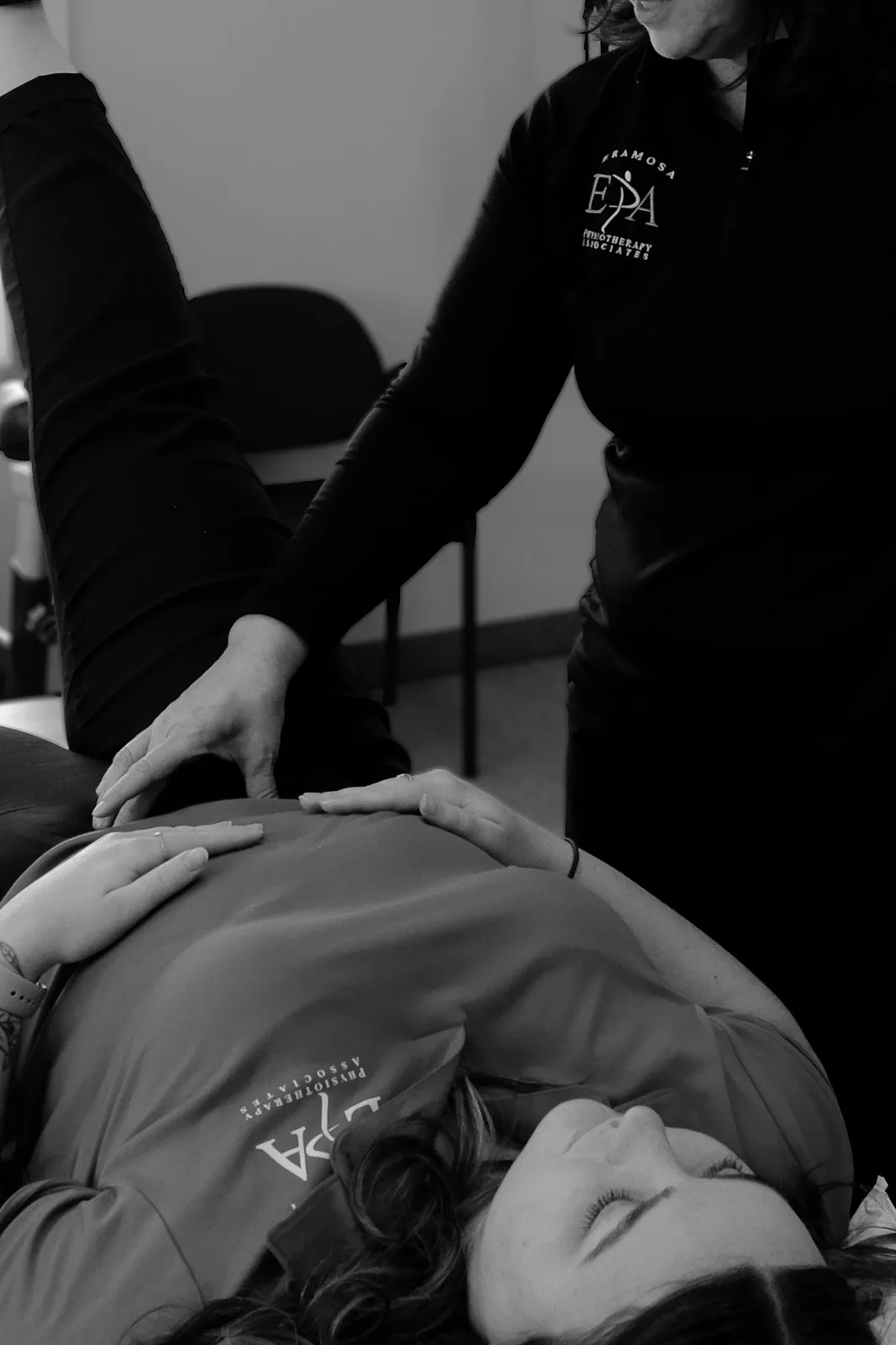
How we support you through Pregnancy & Beyond
EPA’s pelvic health physiotherapists provide education, treatment, and guidance throughout your pregnancy, and after your baby arrives. We offer programs and treatment for:
- Pelvic floor anatomy, and pelvic floor muscle relaxation and strengthening techniques
- Safe exercises during pregnancy
- Positions to promote pelvic muscle relaxation for delivery
- Correct pushing techniques
- Perineal massage
- A gentle home program to start in early postpartum
When Physiotherapy isn’t enough
Pregnancy and postpartum recovery are unique for everyone, and some symptoms warrant a closer look. If you notice ongoing pelvic pain, leaking urine, or a sense of pelvic heaviness that isn’t improving, let your physiotherapist or care provider know — we’ll help determine whether further assessment or a referral is the right next step.
Ready to Get Started?
Schedule Appointment
Book directly with the clinic and physiotherapist of your choice.
Related Articles
No posts found.
Try adjusting your query parameters.
What Our Patients Are Saying
What our patients are saying
Trusted by 2,000+ patients annually for over 30 years.
Frequently Asked Questions
Get your questions answered
Common questions about pregnancy, postpartum, and physiotherapy. Still have questions? We’re happy to help.
No. Physiotherapists in Ontario are primary care providers, so you can book an assessment directly. Direct billing to most major insurers is also available at our clinics.
Yes — for most pregnant people, staying active is not just safe but recommended. Current Canadian guidelines recommend at least 150 minutes of moderate-intensity activity a week, spread over at least three days, unless your care provider has identified a contraindication. Your physiotherapist can help you choose exercises that are appropriate for each stage of pregnancy.
There’s no single right time — some people start early to learn safe exercise and prepare for delivery, while others come in for a specific concern like back pain or bladder leakage. Your physiotherapist can meet you wherever you are in your pregnancy.
No. Pelvic health physiotherapy can begin as soon as you feel ready after delivery, and many people benefit from starting gentle work in the early postpartum weeks. Your physiotherapist will tailor your program to how you’re healing.
Difficult labours, tearing, and interventions like forceps or vacuum delivery can all affect pelvic floor healing. Physiotherapy can support recovery in these cases specifically — your assessment will look at how your pelvic floor is functioning and build a plan around it.
Related conditions
You may also be dealing with
Ready to get started?
Your Recovery Begins Here
.
No Referral Needed.