
Lumbar Strain/Sprain Treatment in Guelph & Wellington County
A pulled muscle in your lower back counts as a strain, and a stretched ligament counts as a sprain. Either way, our physiotherapists diagnose the exact grade of your lumbar injury and map out treatment to help you heal properly and safely return to your normal activities.
. No Referral Needed.
Convenient billing available with most major insurers











If you don’t see your provider listed, give us a call to confirm. Learn more about convenient billing.
A lumbar strain is a pull or tear in a muscle, while a lumbar sprain is a pull or tear in one of the ligaments that hold your spinal bones together. This happens when a muscle or ligament is pulled beyond its typical length (such as during a high-impact collision) or when lifting or carrying something the muscle isn’t strong enough to support. Sprains and strains are graded by severity: a Grade 1 injury is mild, with the muscle or ligament fibres stretched beyond their normal limit but not torn; a Grade 2 injury is moderate, with partial tearing of the tissue; and a Grade 3 injury is severe, involving a complete rupture of the muscle or ligament.
Symptoms of a lumbar strain or sprain can include pain that starts immediately or develops one to two days after the trauma or overuse, coming on suddenly or gradually. Pain often involves a spasm of the muscles in the lower back and/or hips, and typically feels worse when straightening up or moving, and better when relaxed with no pressure on the affected area.
To diagnose a lumbar strain or sprain, your physiotherapist or physician will conduct a thorough assessment, including your injury history, symptom profile, past medical history, and details about your home, work, and exercise life. Pain is usually focused in the lower back and the muscles on either side of the spine, though it can sometimes radiate down the legs. This is followed by a physical exam, including range of motion screening, testing of the nerves exiting your lower back, tension testing, and palpation of the lumbar spine. Neurological testing is typically normal, and the painful muscle or ligament can usually be felt directly. Imaging such as X-ray, CT, or MRI can be used by a physician to rule out other causes, but with a lumbar strain or sprain, imaging typically doesn’t show anything abnormal.
Common causes of Lumbar Strain/Sprain
A lumbar strain or sprain happens when a muscle or ligament in the lower back is pulled beyond its typical length, or when it’s asked to support more than it’s strong enough to handle. Common causes include:
- A high-impact collision or sudden trauma
- Lifting or carrying something the muscle isn’t strong enough to support
Grades of a lumbar strain or sprain
Muscle strains and ligament sprains are often broken into three grades, and your grade shapes both your treatment plan and your expected recovery:
- Grade 1 — a mild injury in which the muscle or ligament fibres are stretched beyond their normal limit, without tearing of the tissue
- Grade 2 — a moderate injury in which the tissue fibres are partially torn
- Grade 3 — a severe injury involving a complete rupture of the muscle or ligament
How we treat Lumbar Strain/Sprain
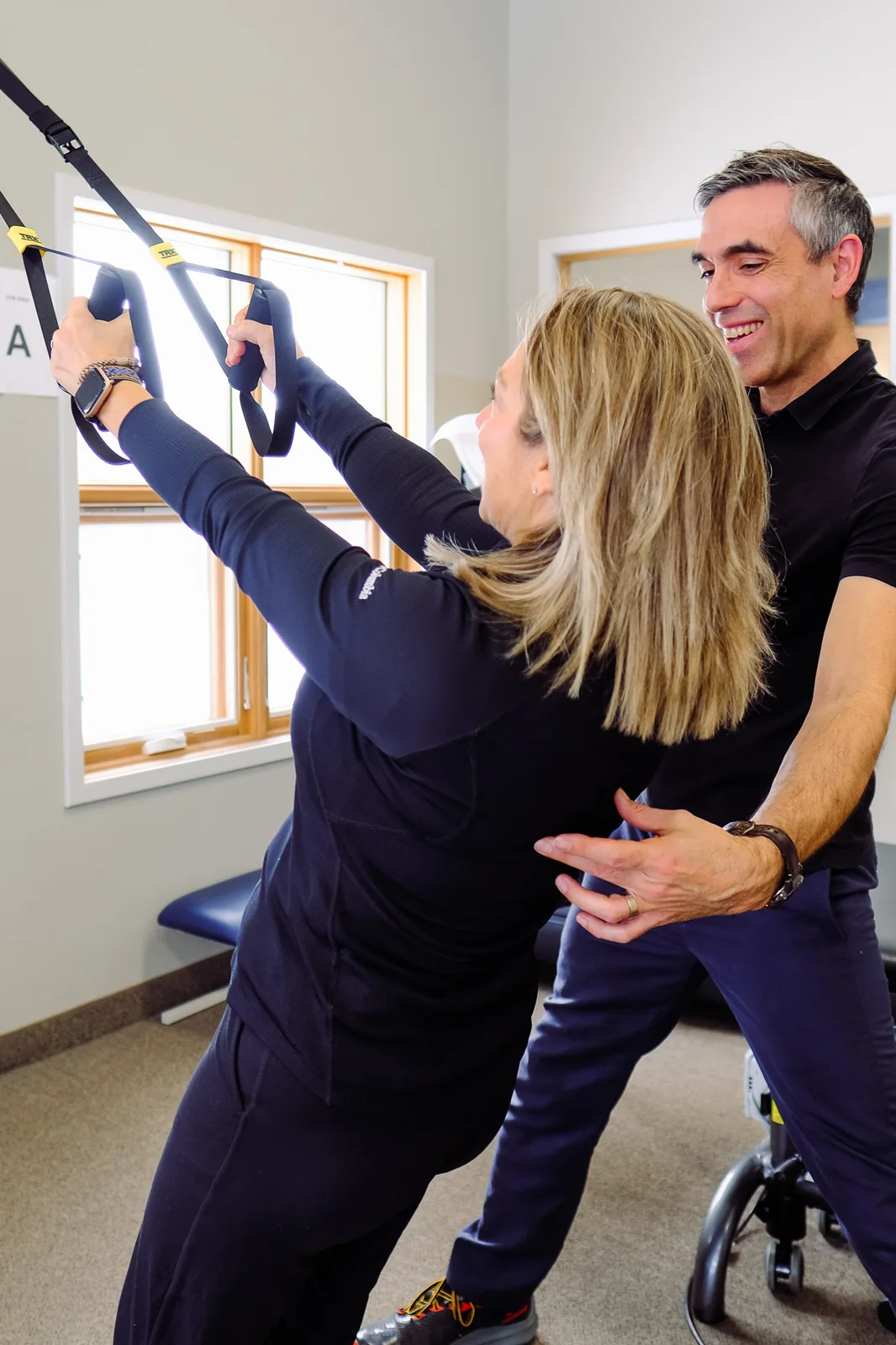
Conservative therapies such as physiotherapy and massage therapy are generally considered the best treatment options for a lumbar strain or sprain. Treatment typically starts by decreasing pain in the irritated muscle or ligament through gentle movement and modalities such as heat or ice.
- Gentle movement and modalities such as heat or ice to reduce pain in the irritated tissue
- Avoiding stretching in the initial phase of healing, since the tissue is already overstretched, unless a compensating muscle needs to release tension
- Progressive restrengthening as the muscle or ligament moves through the acute, subacute, and chronic stages of healing
- A gradual return to your usual activities as healing progresses
- Your physician may also prescribe medication such as muscle relaxants or pain relievers to help reduce irritation in the muscle
Recovery Timeline
Most lumbar strains and sprains fully resolve within 8 to 12 weeks, as the muscle or ligament moves through the acute, subacute, and chronic stages of healing. In some extreme cases, the tissue can become sensitized, leading to chronic or permanent pain. Spinal stimulators can be inserted as a way to manage pain, but this is only considered in extreme, debilitating circumstances after all other conservative treatment methods have failed.
When Physiotherapy isn’t enough
Most lumbar strains and sprains fully resolve with conservative treatment. If your pain isn’t improving in a timely manner based on your assessment findings, we will work with you and your physician to explore next steps — imaging typically shows nothing for a strain or sprain, but it can help rule out other contributing structures.
Ready to Get Started?
Schedule Appointment
Book directly with the clinic and physiotherapist of your choice.
Related Articles
No posts found.
Try adjusting your query parameters.
What Our Patients Are Saying
What our patients are saying
Trusted by 2,000+ patients annually for over 30 years.
Frequently Asked Questions
Get your questions answered
Common questions about lumbar strains and sprains. Still have questions? We’re happy to help.
No. Physiotherapists in Ontario are primary care providers, so you can book an assessment directly. Direct billing to most major insurers is also available at our clinics.
A strain is a pull or tear in a muscle, while a sprain is a pull or tear in one of the ligaments that hold bone to bone. They happen the same ways, cause similar symptoms, and are treated along the same lines — your assessment identifies which tissue is involved.
Most lumbar strains and sprains fully resolve within 8 to 12 weeks as the tissue moves through the acute, subacute, and chronic stages of healing. Your physiotherapist will give you a timeline for your specific grade of injury at your assessment.
Usually not at first. The injured tissue is already overstretched, so stretching is generally avoided in the initial phase of healing — unless a surrounding muscle is compensating and needs to release tension. Your physiotherapist will tell you when stretching becomes helpful rather than harmful.
Typically not — with a lumbar strain or sprain there is usually nothing to see on imaging. A physiotherapy assessment identifies the injured tissue directly, and if anything suggests another cause, we work with your physician, who can order imaging to rule out other structures.
Related conditions
You may also be dealing with
Ready to get started?
Your Recovery Begins Here
.
No Referral Needed.