
Rotator Cuff Tendinitis Treatment in Guelph & Wellington County
When one or more of the rotator cuff tendons become irritated or inflamed, everyday movements like reaching overhead or behind your back can become painful. Our physiotherapists help settle the irritation, rebuild strength, and get your shoulder moving comfortably again.
. No Referral Needed.
Convenient billing available with most major insurers











If you don’t see your provider listed, give us a call to confirm. Learn more about convenient billing.
The rotator cuff is made up of four muscles – the subscapularis, supraspinatus, infraspinatus, and teres minor – that originate from the shoulder blade and attach to the upper arm bone, forming a ‘cuff’ around the ball-and-socket shoulder joint. Much like a golf ball sitting on a tee, the shoulder joint allows for a lot of movement but isn’t very stable on its own, so the rotator cuff muscles work to keep the ball centred in the socket during movement. When the tendons of these muscles become inflamed, it is called rotator cuff tendinitis. Most often, the supraspinatus and subscapularis tendons are affected, though any of the four may be involved.
Symptoms can include pain with raising the arm overhead (like doing your hair or putting things away in a cupboard), pain reaching across your body or behind your back (like fastening a bra, tucking in a shirt, or using a belt), difficulty sleeping or pain that wakes you at night, joint stiffness, decreased mobility and strength in the arm, pain that radiates down toward the elbow, and pain with lifting or pulling.
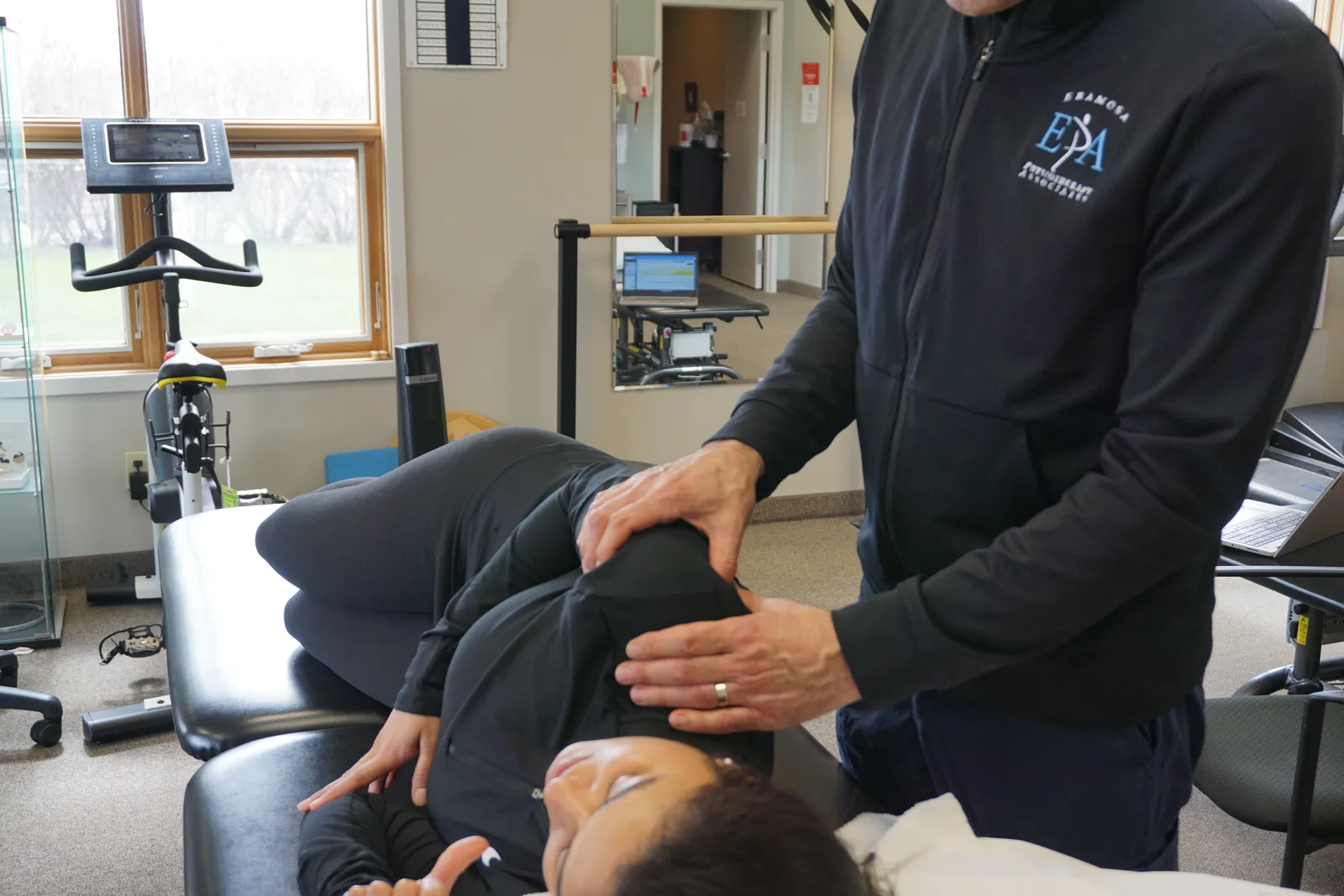
Common causes of Rotator Cuff Tendinitis
Rotator cuff tendinitis usually develops over time rather than from a single injury:
- Repetitive overhead movements, whether work- or sport-related, such as swimming, pitching, or throwing
- Posture, which can lead to shoulder impingement and irritation of the rotator cuff tendons
- Age – our tendons naturally change over time, and these changes can make the rotator cuff somewhat more susceptible to irritation or injury
- Developing secondary to another shoulder injury
- Keeping the shoulder in one position for a long period of time, including certain sleeping positions
- Trauma
How we treat Rotator Cuff Tendinitis
Your physiotherapist will first ask about how your shoulder pain started and behaves, then assess your range of motion, quality of movement, strength, and posture, along with special tests to help identify which structures may be involved. Ultrasound or MRI imaging can also help confirm a diagnosis, though these need to be ordered by your doctor and aren’t necessary before starting physiotherapy – it’s often better to begin treatment sooner rather than waiting on a long imaging wait time. Physiotherapy has been shown to be very effective in managing rotator cuff tendinitis. Through our Path to Improved Health, treatment may include:
- Therapeutic ultrasound
- IFC/TENS
- Acupuncture
- Taping of the shoulder to support it and maintain posture
- Manual therapy techniques to improve range of motion
- A progressive home exercise program tailored to your specific findings
Recovery Timeline
Most cases of rotator cuff tendinitis improve steadily with physiotherapy, and your physiotherapist will outline a realistic timeline based on your specific findings at your first assessment. Your commitment is typically 2–3 visits a week for 20–30 minutes, along with progressive in-clinic and home exercises.
Ready to Get Started?
Schedule Appointment
Book directly with the clinic and physiotherapist of your choice.
Related Articles
No posts found.
Try adjusting your query parameters.
What Our Patients Are Saying
What our patients are saying
Trusted by 2,000+ patients annually for over 30 years.
Frequently Asked Questions
Get your questions answered
Common questions about rotator cuff tendinitis and physiotherapy. Still have questions? We’re happy to help.
No. Physiotherapists in Ontario are primary care providers, so you can book an assessment directly. Direct billing to most major insurers is also available at our clinics.
Most people notice pain reaching overhead or behind the back – tasks like doing your hair, reaching into a cupboard, or fastening a bra can all become uncomfortable. Night pain, stiffness, and pain that radiates down toward the elbow are also common. Your assessment will confirm whether these symptoms point to tendinitis.
No. These need to be ordered by your doctor and can help confirm a diagnosis, but they aren’t necessary before starting physiotherapy. Imaging appointments often have a long wait, so it’s usually better to begin treatment sooner rather than later.
In many cases, yes, with some temporary modifications. Whether you’re an athlete, an office worker, or in a physical job, your physiotherapist will help you identify which movements to adjust and build a plan that keeps you active while your shoulder settles.
Ongoing postural habits and repetitive overhead demands – at work, in sport, or around the house – are common contributors to recurrence. Addressing these, alongside your exercise program, is an important part of preventing flare-ups.
Related conditions
You may also be dealing with
Ready to get started?
Your Recovery Begins Here
.
No Referral Needed.