
Rotator Cuff Tear Treatment in Guelph & Wellington County
A rotator cuff tear can make simple movements like reaching overhead or behind your back painful and difficult. Our physiotherapists assess your tear and build a treatment plan to relieve pain, restore strength, and get you moving again.
. No Referral Needed.
Convenient billing available with most major insurers











If you don’t see your provider listed, give us a call to confirm. Learn more about convenient billing.
The rotator cuff is made up of four muscles, the subscapularis, supraspinatus, infraspinatus, and teres minor, that originate from the shoulder blade and attach to the upper arm bone, forming a cuff around the ball-and-socket shoulder joint. Much like a golf ball sitting on a tee, this joint allows a lot of movement but isn’t very stable on its own, so the rotator cuff muscles work to stabilize it and keep the ball centred in the socket throughout movement.
A rotator cuff tear happens when one or more of these tendons becomes damaged, most often the supraspinatus. Tears can be partial-thickness, where the tendon is frayed but still partly attached to the bone, or full-thickness, where the tear goes all the way through and the tendon is no longer fully attached. Symptoms can include pain and weakness raising your arm overhead or reaching behind your back, pain at rest or at night, decreased range of motion, clicking or popping, and pain that radiates down toward the elbow. A tear from trauma tends to cause immediate, more intense pain, while tears that develop gradually from wear and tear may start mild and worsen over time. It’s also possible to have a tear with little to no pain, though you may still notice weakness with certain activities.
Common causes of Rotator Cuff Tears
Rotator cuff tears typically develop in one of two ways:
- General wear and tear from the aging process, particularly for those over 40
- Repetitive motions, whether for work or sport, which add to the wear-and-tear risk at any age
- Decreased blood supply to the tendons as we age, which limits the body’s ability to repair them and can lead to fraying and, eventually, a tear
- Trauma, such as a sports injury, lifting something too heavy, or falling onto an outstretched arm, more often the cause in younger individuals
Types of Rotator Cuff Tears
Rotator cuff tears vary in how much of the tendon is affected and how they happen — both shape your recovery and treatment plan:
- Partial-thickness tear — also called an incomplete tear; the tendon is damaged but part of it remains intact and attached to the bone, much like a fraying rope
- Full-thickness tear — also called a complete tear; the tear goes all the way through the tendon, and it is no longer fully attached to the bone
- Degenerative (wear-and-tear) tear — develops gradually as tendon tissue breaks down with age, most common after 40 and with repetitive work or sport demands
- Traumatic tear — results from a sudden injury such as a fall onto an outstretched arm, lifting something too heavy, or a sports injury, and is the more common cause in younger individuals
How we treat Rotator Cuff Tears
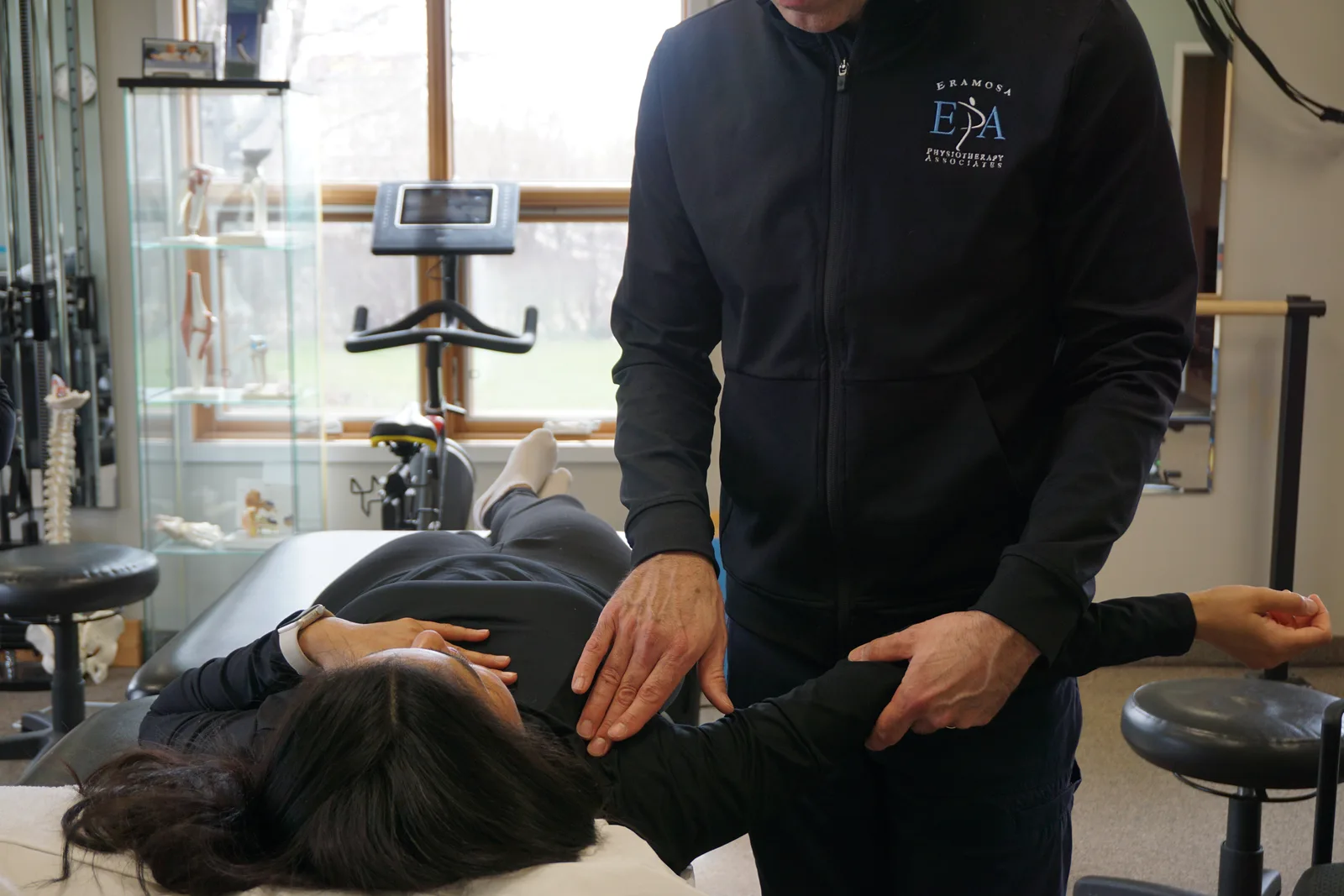
Your physiotherapist will ask about how your pain started, then assess your shoulder’s range of motion, strength, posture, and quality of movement, along with special tests to help identify a rotator cuff tear. Ultrasound and MRI imaging can also help confirm a diagnosis, but these need to be ordered by your doctor and aren’t necessary before starting physiotherapy. In fact, it’s best to begin treatment as soon as possible, even before imaging, to help reduce pain, restore movement and strength, and lower the risk of complications such as frozen shoulder. Non-surgical management of a rotator cuff tear has been shown to be effective in relieving pain and improving function in approximately 80% of patients. Your physiotherapist will work with you to develop a personalized treatment program using:
- Modalities to help manage pain
- Hands-on treatment
- Gentle exercises
- Education on activity modification
- A progressive program to restore the strength and mobility of your shoulder
Recovery Timeline
If you have a full-thickness tear, surgery to reattach the tendon may be needed, but because earlier surgery hasn’t been shown to lead to better outcomes, you’ll typically be encouraged to complete a minimum of three months of physiotherapy first. Continued pain despite conservative treatment is the main reason to move forward with surgery. If you do have surgery, you’ll wear a sling for a minimum of four to six weeks post-op, but physiotherapy can begin just days afterward. At EPA we follow a thorough post-operative protocol to help reduce pain and restore your shoulder’s mobility and function.
Ready to Get Started?
Schedule Appointment
Book directly with the clinic and physiotherapist of your choice.
Related Articles
No posts found.
Try adjusting your query parameters.
What Our Patients Are Saying
What our patients are saying
Trusted by 2,000+ patients annually for over 30 years.
Frequently Asked Questions
Get your questions answered
Common questions about rotator cuff tears and physiotherapy. Still have questions? We’re happy to help.
No. Physiotherapists in Ontario are primary care providers, so you can book an assessment directly. Direct billing to most major insurers is also available at our clinics.
Your physiotherapist can usually tell the difference through a hands-on assessment of your range of motion, strength, and specific special tests. Imaging like ultrasound or MRI can confirm a tear, but it isn’t required before starting physiotherapy.
Not necessarily. Non-surgical management is effective for relieving pain and restoring function in approximately 80% of patients. If you have a full-thickness tear that isn’t improving with conservative treatment, you’ll typically complete a minimum of three months of physiotherapy before a referral to a surgeon is considered.
Yes. It’s possible to have a tear with little to no pain, though you may still notice weakness with certain activities like lifting or reaching overhead. Your assessment will help clarify what’s going on.
As soon as possible – even before you’ve had imaging. Early physiotherapy helps manage pain and maintain mobility, and starting promptly also helps reduce the risk of developing a frozen shoulder alongside the tear.
Related conditions
You may also be dealing with
Ready to get started?
Your Recovery Begins Here
.
No Referral Needed.