
Knee Ligament Sprain Treatment in Guelph & Wellington County
A knee ligament sprain, such as an injury to the posterolateral corner (PLC), can leave your knee feeling unstable and vulnerable to further injury. Our physiotherapists assess the extent of the damage and put together treatment to restore stability and strength.
. No Referral Needed.
Convenient billing available with most major insurers










If you don’t see your provider listed, give us a call to confirm. Learn more about convenient billing.
The posterolateral corner (PLC) of the knee is a complex area where ten different structures — including ligaments and muscle tendons — work together to prevent the shin bone from moving backward. A PLC injury, a type of knee ligament sprain, happens when one or more of these structures is damaged, and it’s often associated with other ligament injuries in the knee, such as the ACL and/or PCL.
Symptoms of a PLC injury can include swelling and pain on the outer back portion of the knee, numbness and weakness in the foot due to disruption of the peroneal nerve, weakness in foot flexion, ankle eversion, or big toe extension, and instability when bearing weight while walking or on stairs.
A thorough examination of both knees — observing rest and activities like walking, palpating the knee’s structures for tenderness or asymmetry, and testing for looseness and side-to-side differences — can diagnose a PLC injury. Imaging such as an MRI is often used as well to visualize and assess the structure of the PLC.
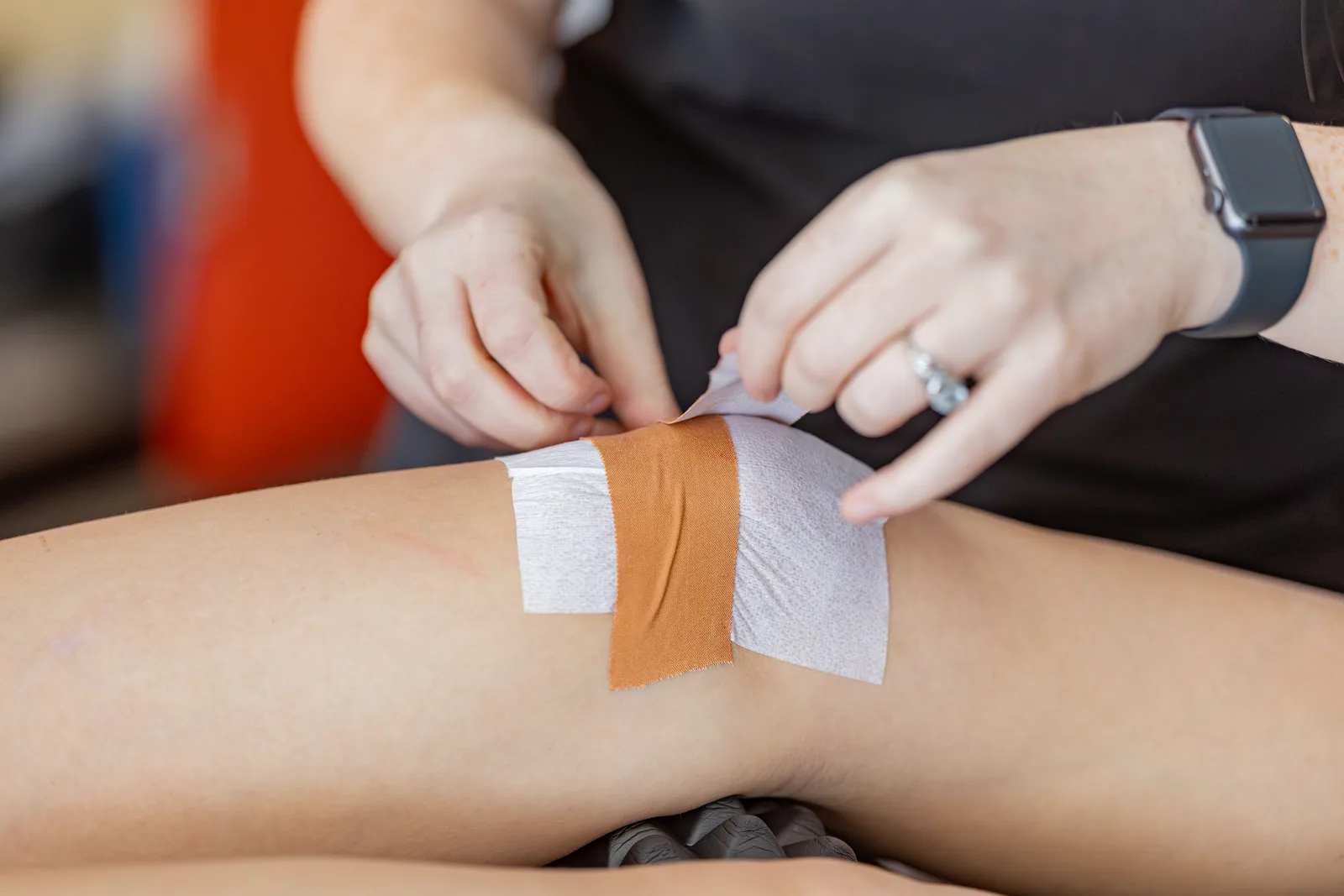
Common causes of Knee Ligament Sprains
PLC injuries are commonly caused by:
- Falls, sports trauma, and motor vehicle accidents
- Any injury that hyperextends, externally rotates, or forces the shin bone inward
- A blow to the front inner corner of the knee when it’s nearly straight
- A blow to the back outer corner of the knee when it’s bent
How we treat Knee Ligament Sprains
In the first week after injury, Rest, Ice, Compression, and Elevation (the RICE method) helps reduce swelling. From there, treatment depends on the severity of the injury, which is classified by grade: Grade 1 is a sprain with joint pain and tenderness, Grade 2 is a partial ligament tear, and Grade 3 is a complete ligament tear. Grade 1 and Grade 2 injuries typically respond well to conservative treatment through physiotherapy; Grade 3 injuries typically require surgical repair.
- Quad strengthening to help offload compression on the knee
- Myofascial release
- Mobility work to improve knee range of motion
- Lymphatic massage to stimulate drainage of the lower body’s lymphatic system
Recovery Timeline
Recovery from a knee ligament sprain depends on the grade of your injury, and your physiotherapist will outline a realistic timeline based on your specific diagnosis at your first assessment. Your commitment is typically 2–3 visits a week for 20–30 minutes, along with progressive in-clinic and home exercises.
When Physiotherapy isn’t enough
Grade 3 PLC injuries — a complete tear of the ligament — typically require surgical repair. If your assessment points to a higher-grade injury, we will work with you and your family doctor to arrange the right imaging and surgical consultation, and support your rehabilitation before and after surgery.
Ready to Get Started?
Schedule Appointment
Book directly with the clinic and physiotherapist of your choice.
Related Articles
No posts found.
Try adjusting your query parameters.
What Our Patients Are Saying
What our patients are saying
Trusted by 2,000+ patients annually for over 30 years.
Frequently Asked Questions
Get your questions answered
Common questions about knee ligament sprains and physiotherapy. Still have questions? We’re happy to help.
No. Physiotherapists in Ontario are primary care providers, so you can book an assessment directly. Direct billing to most major insurers is also available at our clinics.
The posterolateral corner (PLC) is a complex area on the outer back portion of the knee made up of ten different ligaments and tendons that work together to keep the shin bone from moving backward. An injury here is a type of knee ligament sprain.
It depends on the grade. Grade 1 is a sprain with pain and tenderness, Grade 2 is a partial ligament tear, and Grade 3 is a complete tear. Grade 1 and 2 injuries typically respond well to physiotherapy, while Grade 3 injuries usually need surgical repair.
Not always. Grade 1 and Grade 2 injuries typically respond well to conservative treatment through physiotherapy. Grade 3 injuries — a complete ligament tear — usually require surgical repair, and we’ll coordinate that with your family doctor.
Treatment typically includes quad strengthening to offload the knee, myofascial release, mobility work to restore range of motion, and techniques to help manage swelling, all tailored to the severity of your injury.
Related conditions
You may also be dealing with
Ready to get started?
Your Recovery Begins Here
.
No Referral Needed.