
Frozen Shoulder Treatment in Guelph & Wellington County
Frozen shoulder causes the shoulder’s joint capsule to become inflamed, tight, and stiff, leading to pain and a gradual loss of movement. Our physiotherapists help manage pain and restore mobility at each stage of the condition.
. No Referral Needed.
Convenient billing available with most major insurers











If you don’t see your provider listed, give us a call to confirm. Learn more about convenient billing.
The shoulder is a ball-and-socket joint surrounded by a joint capsule that holds in fluid and helps stabilize the joint. With frozen shoulder, this capsule becomes inflamed, shrinks, and sticks to the shoulder joint itself, which can severely limit your range of motion.
Frozen shoulder typically progresses through three stages. In the freezing stage, you’ll notice intense pain with movement, especially quick movements, though range of motion is only mildly restricted. In the frozen stage, pain doesn’t worsen and may even ease slightly, but the shoulder becomes very stiff and difficult to move. In the thawing stage, pain continues to lessen and range of motion gradually improves.
Common causes of Frozen Shoulder
Frozen shoulder usually develops in one of two ways: without a known reason (insidious onset), or as a progression of another injury. If you’re already dealing with shoulder pain or a shoulder injury, seeing a physiotherapist early can help – gentle, guided exercises to maintain mobility while you heal can lower the risk of the joint stiffening into a frozen shoulder.
- Insidious/idiopathic onset – there’s limited research into why this happens, though one theory links it to changing hormone levels around middle age. It’s more common in women, affecting up to 70% of people with the condition
- Insidious onset is also more likely in people with certain health conditions, including diabetes (10–20% of people with diabetes develop frozen shoulder), hyper- or hypothyroidism, cardiovascular disease, and Parkinson’s disease
- Prolonged immobility following another shoulder injury, such as a rotator cuff injury or a broken arm
- Prolonged immobility following a stroke or shoulder surgery, when the joint isn’t moved regularly during recovery
How we treat Frozen Shoulder
Treatment for frozen shoulder may include:
- X-ray or ultrasound guided cortisone injections to reduce inflammation, often followed by physiotherapy to build on the increase in mobility
- Modalities to help control pain, including acupuncture, intramuscular stimulation (IMS)/dry needling, therapeutic ultrasound, and interferential current (IFC) or TENS
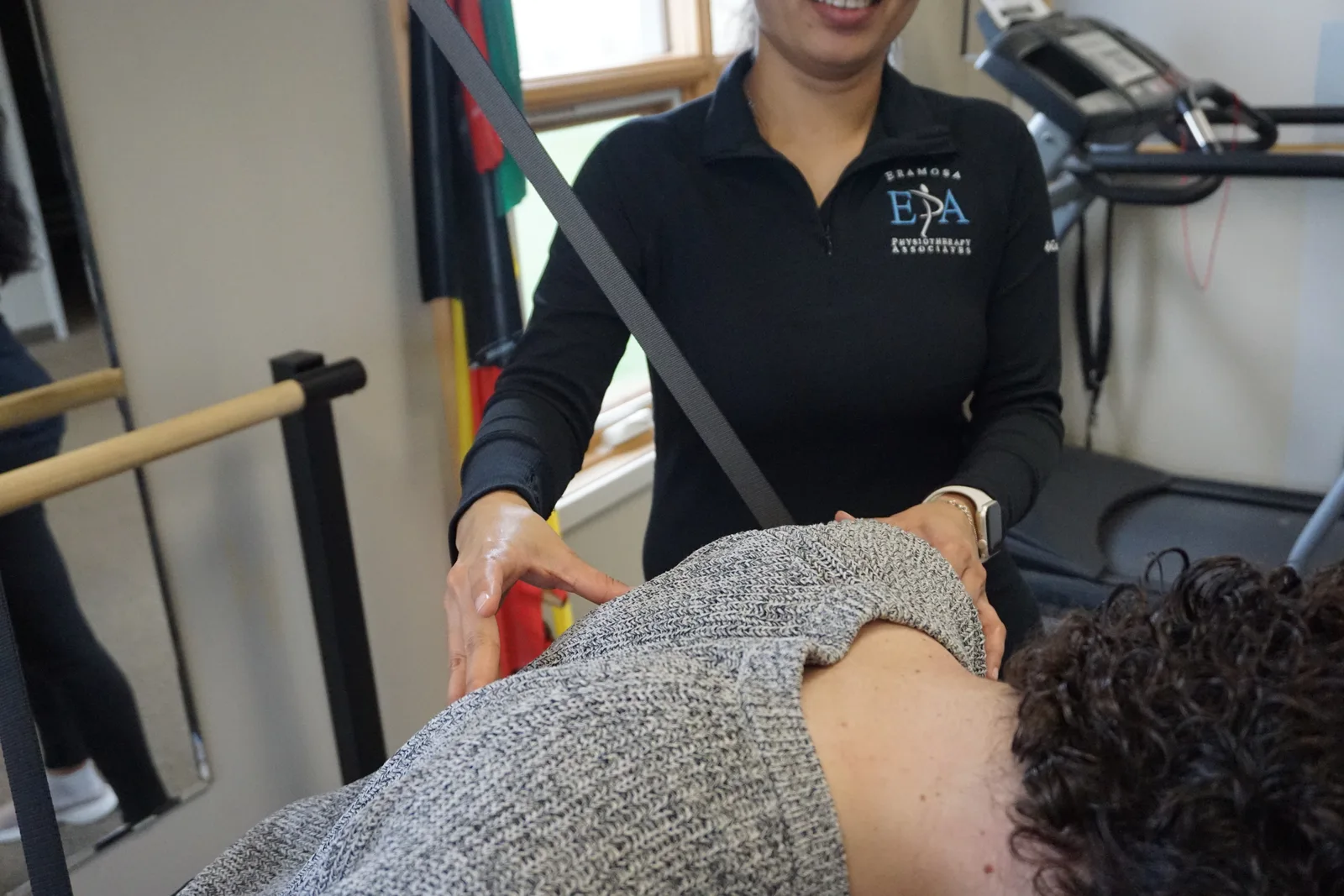
- Manual therapy techniques and an individualized exercise program to improve mobility and speed up recovery
Recovery Timeline
Although frozen shoulder often improves over time, recovery can be lengthy, ranging from many months to several years. Treatment can help reduce pain, restore movement, and shorten the recovery process.
When Physiotherapy isn’t enough
If your frozen shoulder isn’t easing with physiotherapy alone, we’ll work with you and your family doctor to explore next steps, which may include a referral for X-ray or ultrasound guided cortisone injections into the joint capsule. These are performed by an interventional radiologist and are often followed by physiotherapy to help maintain and build on the increase in mobility.
Ready to Get Started?
Schedule Appointment
Book directly with the clinic and physiotherapist of your choice.
Related Articles
No posts found.
Try adjusting your query parameters.
What Our Patients Are Saying
What our patients are saying
Trusted by 2,000+ patients annually for over 30 years.
Frequently Asked Questions
Get your questions answered
Common questions about frozen shoulder and physiotherapy. Still have questions? We’re happy to help.
No. Physiotherapists in Ontario are primary care providers, so you can book an assessment directly. Direct billing to most major insurers is also available at our clinics.
Although frozen shoulder often improves over time, recovery can be lengthy, ranging from many months to several years. Treatment can help reduce pain, restore movement, and shorten the recovery process.
Frozen shoulder progresses through three stages: freezing, where movement is intensely painful but only mildly restricted; frozen, where pain eases slightly but stiffness peaks; and thawing, where pain continues to lessen and range of motion gradually returns. Your treatment is tailored to the stage you’re in.
Not always. They’re one treatment option, typically image-guided and performed by an interventional radiologist, and are often paired with physiotherapy to help stretch the joint and maintain any gains in mobility. Your physiotherapist and doctor can help you decide if they’re appropriate for you.
It’s more common in women and tends to develop around middle age. It’s also more likely in people with diabetes, thyroid conditions, cardiovascular disease, or Parkinson’s disease, and in anyone who has kept a shoulder immobile for a long period after an injury, stroke, or surgery.
Related conditions
You may also be dealing with
Ready to get started?
Your Recovery Begins Here
.
No Referral Needed.