Shoulder Dislocation & Separation Treatment in Guelph and Wellington County
Whether it’s a full shoulder dislocation or a shoulder separation affecting the ligaments at the top of your shoulder, both typically follow a fall or injury. Our physiotherapists help you rebuild strength, motion, and confidence in your shoulder afterward.
. No Referral Needed.
Convenient billing available with most major insurers










If you don’t see your provider listed, give us a call to confirm. Learn more about convenient billing.
A shoulder dislocation happens when the top of the upper arm bone comes out of the shoulder socket, usually after a fall or injury. A shoulder separation is a different injury, where the collarbone is pulled away from the top of the shoulder, damaging the ligaments in that area.
As with other shoulder injuries, problems following a dislocation or separation can involve pain, stiffness, and reduced strength or range of motion. An accurate assessment is important so that treatment is matched to your specific injury.
Common causes of Shoulder Dislocation & Separation
Both injuries are most often caused by:
- Sports involving forceful contact (such as hockey or football) or a risk of high-impact falls (such as skiing or gymnastics), most common in teenagers and young adults in their 20s
- A forceful pull on the arm, or the arm being jarred while out to the side, such as during a trip or fall – the most common cause of dislocation
- A fall directly onto the shoulder, or a direct blow to the top of the shoulder, such as being checked into the boards in hockey – the most common cause of separation
- Less commonly, a car accident, a stroke (due to muscle paralysis), or a seizure
Types of shoulder dislocation and separation
Both injuries take a few different forms, and the type you have shapes your recovery and treatment plan:
- Anterior shoulder dislocation — the most common direction; the ball of the upper arm bone slides forward out of the socket, often when the arm is forcefully pulled or braced during a fall
- Posterior or inferior shoulder dislocation — less common directions, where the ball slides backward or downward out of the socket
- AC joint separation — the collarbone is pulled away from the top of the shoulder blade, spraining or tearing the surrounding ligaments; graded on a scale of 1 to 3 depending on which ligaments are affected
- Recurrent dislocation — repeated dislocations of the same shoulder, more likely after a first-time dislocation without adequate strength and proprioception rehabilitation, and the group more often considered for surgical stabilization
How we treat Shoulder Dislocation & Separation
Through our Path to Improved Health, we address shoulder injuries like these using treatments such as:
- Hands-on therapy or mobilization
- Specific strengthening and postural retraining exercises
- Proprioception and joint-position exercises, which are especially important for preventing future dislocations
- Education on avoiding inappropriate and provoking positions
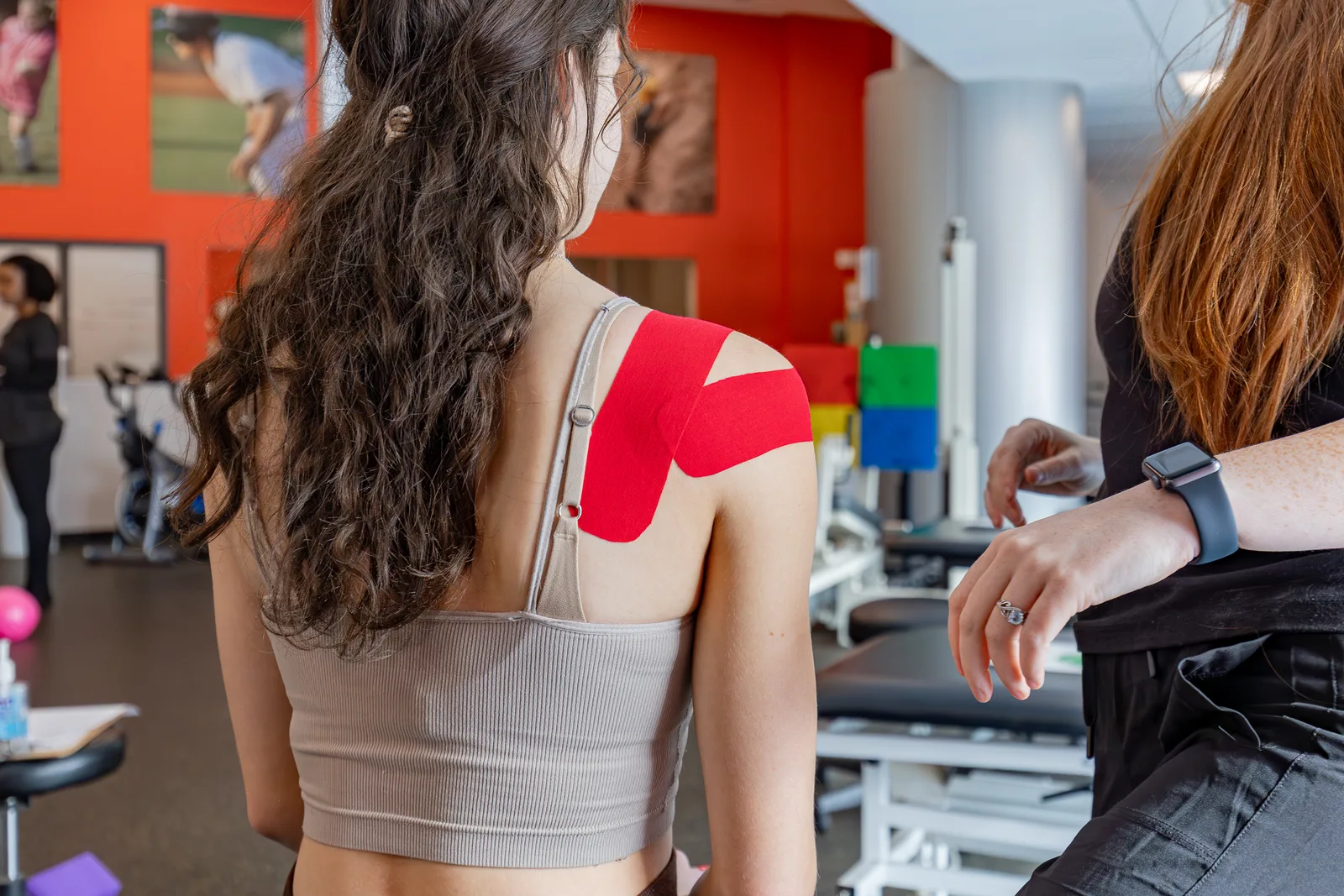
- Modalities such as acupuncture, TENS, or taping for pain control, and ultrasound to improve tissue healing time
Recovery Timeline
Recovery timelines differ between the two injuries. Following a dislocation, most people wear a sling for a minimum of 4 to 6 weeks, with a gradual return to moderate activity around 3 to 4 months and a longer timeline for return to sport. Following a separation, sling use is typically brief – 1 to 2 weeks or not at all, depending on severity – with range of motion and early strengthening progressing over the first 4 to 6 weeks, and advanced strengthening and return to sport over the following 2 to 4 weeks. Many athletes return to play around 5 to 6 weeks after a separation, depending on severity, often with taping for support.
When Physiotherapy isn’t enough
If your shoulder does not improve in a timely manner, we will work with your healthcare provider to request further diagnostic tests. Surgery is occasionally considered for first-time dislocations, and more commonly for repeated dislocations or, in rare severe separations, when there’s a risk to nearby structures – but most people recover fully with conservative physiotherapy. Our goal is to return your shoulder to full function, whether that means a return to work, a specific sport or activity, or a pain-free sleep.
Ready to Get Started?
Schedule Appointment
Book directly with the clinic and physiotherapist of your choice.
Related Articles
No posts found.
Try adjusting your query parameters.
What Our Patients Are Saying
What our patients are saying
Trusted by 2,000+ patients annually for over 30 years.
Frequently Asked Questions
Get your questions answered
Common questions about shoulder dislocation, separation, and physiotherapy. Still have questions? We’re happy to help.
No. Physiotherapists in Ontario are primary care providers, so you can book an assessment directly. Direct billing to most major insurers is also available at our clinics.
A dislocation involves the ball-and-socket joint – the top of your upper arm bone comes out of the shoulder socket. A separation involves a different joint, the acromioclavicular (AC) joint where your collarbone meets the top of your shoulder blade, and happens when the ligaments there are sprained or torn.
Sometimes, through what’s called self-reduction. If it doesn’t go back into place on its own, it needs to be reduced by a doctor at a hospital – never on your own, or by a coach or parent, since there are important structures nearby that can be damaged if it isn’t done properly.
Not usually. Conservative physiotherapy is the recommended first-line treatment for both injuries. Surgery is more commonly considered after repeated dislocations, or in a small number of more severe separations. Most people recover full function without it.
As soon as possible after any initial immobilization period. Research supports starting physiotherapy right away, and early treatment – including proprioception exercises – plays an important role in reducing your risk of another dislocation down the road.
Related conditions
You may also be dealing with
Ready to get started?
Your Recovery Begins Here
.
No Referral Needed.