
Hip & Groin Pain Treatment in Guelph and Wellington County
Hip and groin pain can make everyday movement like walking, running, or changing direction uncomfortable. Our physiotherapists put together treatment to help you move without pain. No referral is needed to book.
. No Referral Needed.
Convenient billing available with most major insurers











If you don’t see your provider listed, give us a call to confirm. Learn more about convenient billing.
Walking, running, and changing direction can all become uncomfortable when hip and groin pain sets in, making it harder to stay as active as you’d like. It can result from muscle strain, joint irritation, or overuse.
The hip joint itself can become stiff and painful over time, particularly as we age, while the surrounding muscles and tendons that let you walk, climb stairs, run, and jump are common sources of strain-related pain. Hip and groin pain can also be referred from problems in the low back or knee, which is why an accurate assessment matters before starting treatment.
At EPA, we’ve also developed the Groin Injury Prevention Program (GRIPP), aimed at reducing the risk of first-time and recurrent groin injuries for athletes and active patients. Our physiotherapists identify the source of your hip or groin pain and build a treatment plan around it.
Common causes of hip and groin pain
The hip carries your body weight through walking, running, and every change of direction, so pain here can come from the joint itself, the surrounding muscles, or even problems elsewhere in the kinetic chain. Common causes of hip and groin pain include:
- Osteoarthritis or general wear in the hip joint, which tends to become stiffer and more painful with age
- Muscle strain or tendon irritation in the hip flexors, adductors (groin), or hamstrings
- Overuse or repetitive strain from running, kicking, or change-of-direction sports
- Sudden overload or an awkward movement, such as sprinting or pivoting
- Referred pain from musculoskeletal problems in the low back or knee
- Poor biomechanics or muscle imbalance around the hip and pelvis
Medical diagnoses for hip and groin pain
Hip and groin pain can stem from several specific medical conditions. Each one has its own causes, symptoms, and treatment considerations — and identifying the right one shapes your treatment plan:
- Hip osteoarthritis — degenerative changes in the hip joint that cause stiffness and pain, often worse with activity
- Greater trochanteric bursitis — inflammation of the tissue over the outside of the hip, often painful when lying on the affected side
- Hip flexor strain — a strain of the muscles at the front of the hip, often from sprinting, kicking, or sudden acceleration
- Groin or adductor strain — a strain or tear of the inner-thigh muscles, common in sports involving cutting or change of direction
- Hamstring strain — an injury to the muscles at the back of the thigh, often from sudden acceleration or overstretching
- Post-surgical hip rehabilitation — recovery and strengthening following hip replacement or other hip surgery
- Fractures of the hip, femur, or pelvis — following significant trauma; these require medical assessment before physiotherapy begins
How we treat Hip & Groin Pain
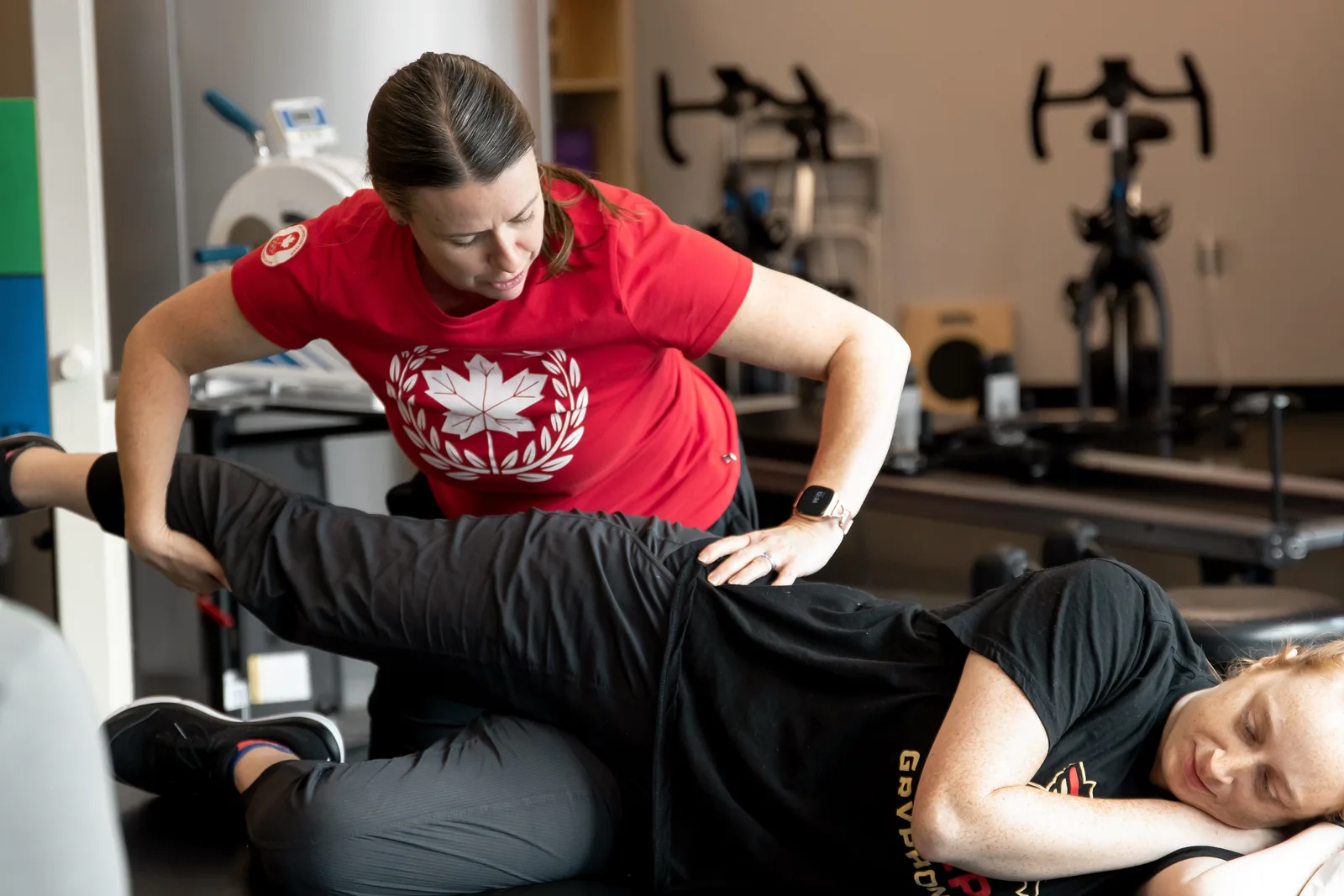
Our approach to hip and groin pain is built around orthopaedic physiotherapy, tailored to your specific symptoms and goals. Through our Path to Improved Health, treatment may include:
- Hands-on manual therapy to restore hip joint mobility and ease muscle tightness
- Targeted strengthening for the hip, groin, and surrounding muscles, progressing to sport-specific or functional loading
- Our GRIPP (Groin Injury Prevention Program) protocol, developed at EPA to help reduce the risk of initial and recurrent groin injuries
- Movement retraining to correct biomechanics that place extra stress on the hip and groin
- Education on activity modification and load management during recovery
Recovery Timeline
Most episodes of hip and groin pain improve steadily with treatment, and your physiotherapist will outline a realistic timeline based on your specific diagnosis at your first assessment. Your commitment is typically 2–3 visits a week for 20–30 minutes, along with progressive in-clinic and home exercises.
When Physiotherapy isn’t enough
If your hip or groin pain isn’t improving in a timely manner based on your diagnosis — or you develop symptoms such as progressive weakness, numbness down the leg, or difficulty bearing weight — we will work with you and your healthcare provider to explore further medical assessment or imaging.
Ready to Get Started?
Schedule Appointment
Book directly with the clinic and physiotherapist of your choice.
Related Articles
No posts found.
Try adjusting your query parameters.
What Our Patients Are Saying
What our patients are saying
Trusted by 2,000+ patients annually for over 30 years.
Frequently Asked Questions
Get your questions answered
Common questions about hip and groin pain and physiotherapy. Still have questions? We’re happy to help.
No. Physiotherapists in Ontario are primary care providers, so you can book an assessment directly. Direct billing to most major insurers is also available at our clinics.
It depends on the diagnosis, how long you’ve had the pain, and your activity demands. Many episodes improve steadily over a few weeks of treatment; your physiotherapist will give you a realistic timeline at your first assessment and adjust it as you progress.
GRIPP (Groin Injury Prevention Program) is a program developed at EPA aimed at reducing the risk of first-time and recurrent groin injuries, particularly for athletes in sports involving running, kicking, and change of direction. Ask your physiotherapist whether it’s a fit for you.
Yes. While physiotherapy can’t reverse arthritic changes in the joint, it can reduce pain and improve movement through targeted strengthening, hands-on treatment, and activity modification. Many patients manage hip osteoarthritis successfully without surgery.
Most hip and groin pain isn’t dangerous, but see a doctor promptly if your pain follows significant trauma, or comes with progressive weakness, numbness, or an inability to bear weight. If anything like this comes up during your assessment, we’ll direct you to the right care.
Related conditions
You may also be dealing with
Ready to get started?
Your Recovery Begins Here
.
No Referral Needed.