Knee Osteoarthritis Treatment in Guelph & Wellington County
Osteoarthritis wears down the protective cartilage in your knee over time, leading to pain, stiffness, and reduced mobility. Our physiotherapists help you manage pain and stay active, whatever stage of OA you’re in.
. No Referral Needed.
Convenient billing available with most major insurers











If you don’t see your provider listed, give us a call to confirm. Learn more about convenient billing.
Osteoarthritis (OA) is a disease in which the structures within the knee’s articular cartilage break down, causing the cartilage to erode. As it wears away, the bones underneath are affected and bone spurs (osteophytes) can develop.
Common symptoms of knee OA include stiffness, a loss of range of motion (making stairs or getting in and out of chairs, cars, or the bath more difficult), pain with movement, pain after prolonged sitting or lying down, and joint swelling or enlargement.
A doctor will typically perform a physical exam and may order imaging such as X-ray or MRI, along with blood tests, to determine the type and severity of the arthritis. From there, a physiotherapist provides an in-depth, function-focused assessment of your range of motion, gait, strength, balance, and movement patterns to build a treatment plan around your goals.
Common causes of Knee Osteoarthritis
Knee OA most often develops with age, though several other factors can contribute:
- Weight: carrying excess weight increases the force on the knee, causing more wear and tear over time
- Genetics: hereditary factors — including bone composition and physical irregularities visible on X-ray — can play a role, and conditions like rheumatoid arthritis or certain metabolic diseases can also predispose you to OA
- Sex: females over 55 tend to develop OA more often than males
- Occupation and athletics: jobs involving frequent kneeling, squatting, or heavy lifting increase risk, as do sports like soccer, tennis, and long-distance running that place greater force on the knee
How we treat Knee Osteoarthritis
Treatment for knee OA falls into conservative and surgical approaches. Conservative care is used first to minimize pain and maximize function, and only a small proportion of people with OA go on to need a surgical consult.
- Patient education, exercise therapy, and activity modification
- Guidance on weight management
- Knee bracing
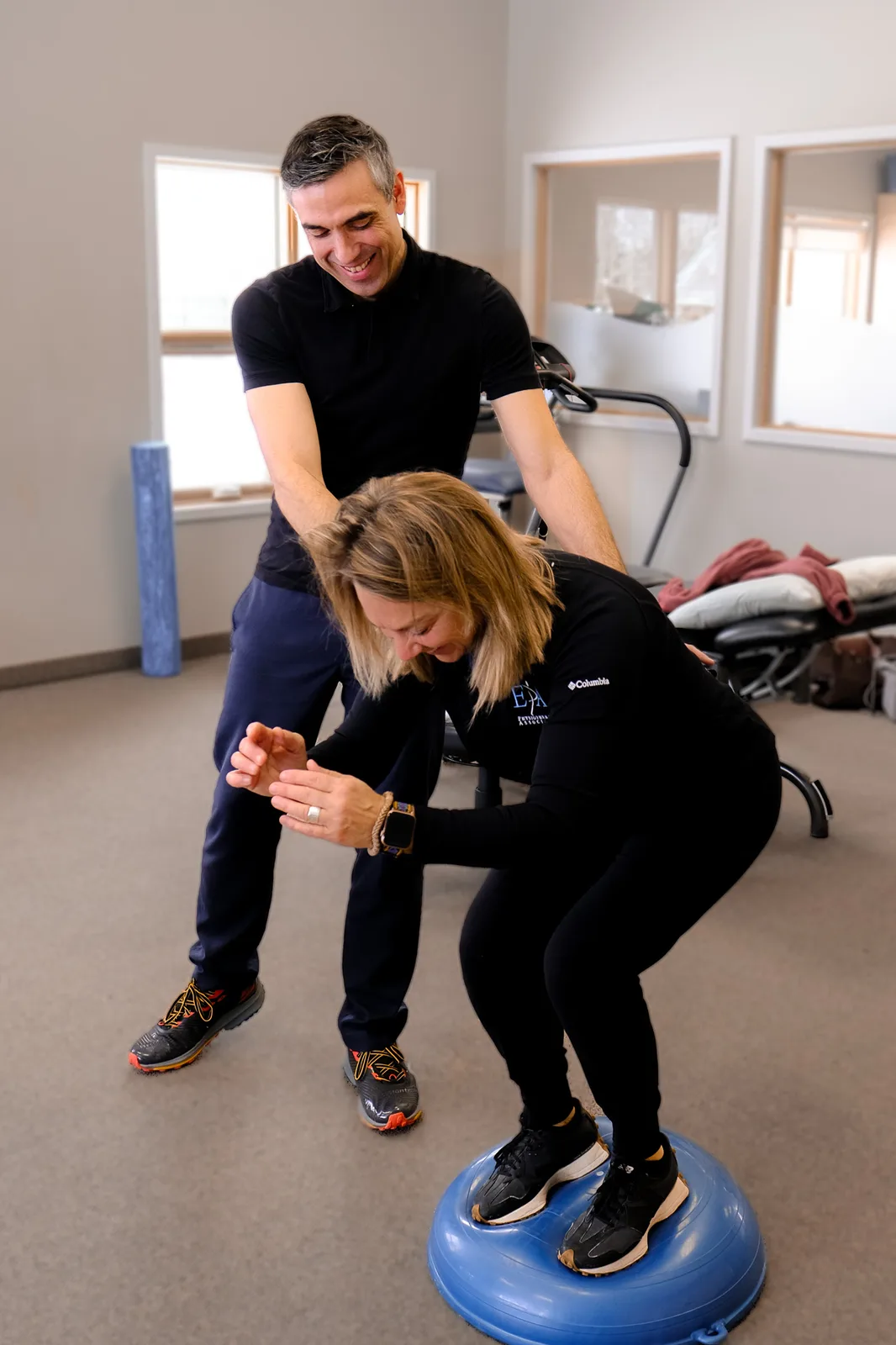
- Individualized exercise programs, such as the GLA:D Program, including quad strengthening to offload the knee, glute strengthening for leg stability, and stretching for the hamstrings and calves
- Supplementary treatments including hydrotherapy, taping, massage, and electrotherapy (IFC/TENS)
Recovery Timeline
Knee osteoarthritis is a chronic, progressive condition, so treatment focuses on managing pain and maximizing function over the long term rather than a fixed recovery window. Your physiotherapist will outline a realistic plan based on your specific presentation at your first assessment. Your commitment is typically 2–3 visits a week for 20–30 minutes, along with progressive in-clinic and home exercises.
When Physiotherapy isn’t enough
Only a small proportion of people with knee OA need a surgical consult. If conservative management is no longer effective for you, we will work with you and your family doctor to explore options such as therapeutic injections, arthroscopy, osteotomy, or knee arthroplasty, including total knee replacement.
Ready to Get Started?
Schedule Appointment
Book directly with the clinic and physiotherapist of your choice.
Related Articles
No posts found.
Try adjusting your query parameters.
What Our Patients Are Saying
What our patients are saying
Trusted by 2,000+ patients annually for over 30 years.
Frequently Asked Questions
Get your questions answered
Common questions about knee osteoarthritis and physiotherapy. Still have questions? We’re happy to help.
No. Physiotherapists in Ontario are primary care providers, so you can book an assessment directly. Direct billing to most major insurers is also available at our clinics.
For most people, yes — conservative treatment is used first to manage pain and maximize function, and only a small proportion of people with knee OA go on to need a surgical consult. Your physiotherapist builds a plan around your goals and adjusts it as your condition changes.
GLA:D is an individualized exercise program for knee (and hip) osteoarthritis that combines quad and glute strengthening with stretching to offload the joint and improve stability. Your physiotherapist can let you know if it’s a good fit for you.
No — appropriately dosed exercise is one of the most effective conservative treatments for knee OA. Your physiotherapist tailors an exercise program to your current function so you build strength without overloading the joint.
OA does become more common with age, but that doesn’t mean nothing can be done. Conservative treatment — education, exercise, weight management, and bracing when appropriate — helps most people manage pain and stay active for years before, if ever, needing a surgical consult.
Related conditions
You may also be dealing with
Ready to get started?
Your Recovery Begins Here
.
No Referral Needed.