Concussion Treatment in Guelph & Wellington County
A concussion can affect how you feel, think, and move. Our physiotherapists guide safe, gradual recovery and support a step-by-step return to daily activities, work, and sport. No referral required.
. No Referral Needed.
Convenient billing available with most major insurers









If you don’t see your provider listed, give us a call to confirm. Learn more about convenient billing.
A concussion is a mild brain injury that can affect how you feel, think, and move, often causing symptoms like headache and sensitivity to noise, vision changes and sensitivity to light, dizziness or nausea, a foggy or slowed-down feeling, unsteadiness or balance loss, reduced concentration or memory, neck pain, fatigue, increased emotionality or anxiety, and difficulty sleeping.
A concussion diagnosis can bring anxiety that extends beyond the person who is injured. Parents of a child with a concussion often feel helpless and unsure what comes next, and athletes and adults alike can feel stress about what recovery will mean for school, work, sport, and family responsibilities.
Physiotherapy helps guide safe, gradual recovery by managing symptoms, improving balance and exercise tolerance, and supporting a step-by-step return to daily activities, work, and sport.
Common causes of Concussion Management
Concussions can result from a direct impact to the head or from an indirect force that jolts the neck and brain. Common causes include:
- A direct impact to the head, for example a fall, a blow during sport (such as a baseball to the mask or a body check), or hitting your head on a car door or other object
- An indirect force to the head, such as an awkward stumble or a whiplash-type movement that jolts the neck without a direct hit
How we treat Concussion Management
Our approach to concussion care may include:
- Assessment and treatment of neck- and vestibular-related symptoms using manual therapy techniques
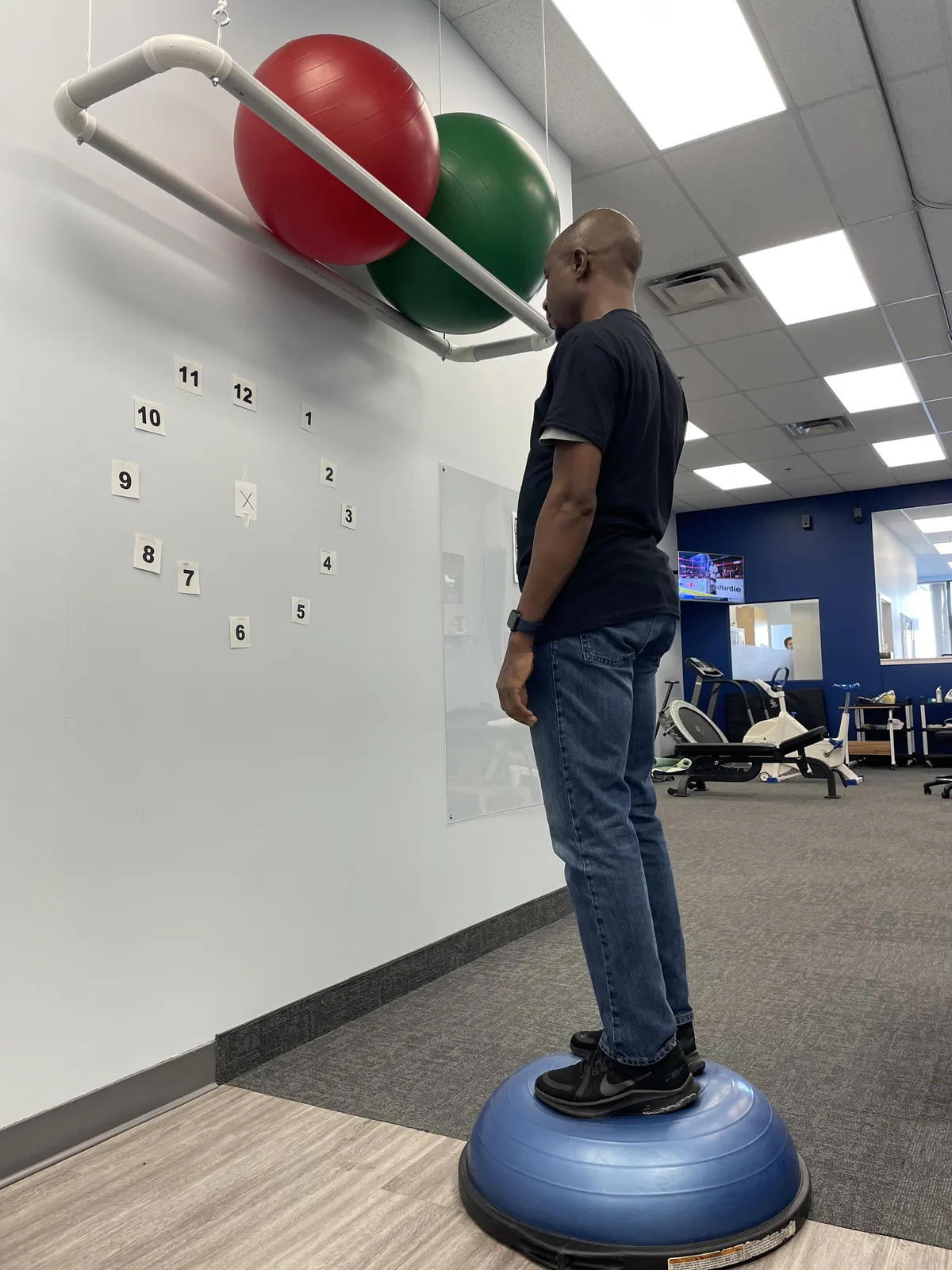
- Balance and vision training exercises when appropriate
- A structured cardiovascular conditioning and sport-specific protocol before returning to sport
- Ongoing communication and advocacy with your doctor, coach or trainer, and employer
- Concussion baseline testing, including a review of medical history, neck movement and strength, visual-ocular system function, and balance, cognition, and memory testing, available for individuals and sporting organizations
- Guidance on concussion prevention — following the rules of your sport to avoid unnecessary head and body contact; to date, no specific helmet or mouth guard has been shown to reduce concussive symptoms
Recovery Timeline
Most concussions resolve within 1 to 2 weeks when treated appropriately, and most people are cleared to return to school, work, and sport within about that time. Recovery can take longer if you have more severe symptoms, and often takes longer if you’re under the age of 18.
When to seek further care
Always look for a medical professional to assess any symptoms after a possible concussive incident. The brain remains in a vulnerable state after a concussion, and another impact during this time can affect your long-term recovery, so it’s important to be assessed promptly and to follow your physiotherapist’s guidance on returning to school, work, and sport. If your symptoms are severe, worsening, or not following the expected pattern of recovery, we will communicate directly with your family doctor to coordinate further assessment.
Ready to Get Started?
Schedule Appointment
Book directly with the clinic and physiotherapist of your choice.
Related Articles
No posts found.
Try adjusting your query parameters.
What Our Patients Are Saying
What our patients are saying
Trusted by 2,000+ patients annually for over 30 years.
Frequently Asked Questions
Get your questions answered
Common questions about concussion management and physiotherapy. Still have questions? We’re happy to help.
No. Physiotherapists in Ontario are primary care providers, so you can book an assessment directly. Direct billing to most major insurers is also available at our clinics.
Most concussions resolve within 1 to 2 weeks when treated appropriately, and most people are cleared to return to school, work, and sport within about that time. Recovery can take longer with more severe symptoms, and often takes longer if you’re under 18.
Treatment is tailored to what’s driving your symptoms — often a combination of manual therapy for the neck and vestibular system, balance and vision training, and a structured return-to-sport conditioning protocol. Your physiotherapist coordinates with your doctor, coach, and employer along the way.
Yes, we offer concussion baseline testing for individuals and sporting organizations, including a review of medical history, neck movement and strength, visual-ocular function, and balance, cognition, and memory testing. Baseline results give us a comparison point if an athlete is later assessed for a possible concussion.
Always have any possible concussion assessed by a medical professional. The brain remains in a vulnerable state after a concussion, so a second impact during that time can affect long-term recovery — which is why prompt assessment and following your physiotherapist’s guidance on returning to activity matters.
Related conditions
You may also be dealing with
Ready to get started?
Your Recovery Begins Here
.
No Referral Needed.